
The best time to visit Kenya for a safari is the dry season, from July to October and again from January to February. Grass is short, animals gather near water, and the tracks are firm. The Great Wildebeest Migration crosses the Mara River mainly from late July to September. "Best" still depends on what you want, because Kenya has excellent wildlife, birdlife and coast in almost every month.
This guide explains how Kenya’s seasons work, how to match the month to your priorities, and what each month looks like for weather, wildlife and crowds. It also covers the months to avoid and how many days to allow, so you can settle your dates without more searching.
Best Camping Tours & Safaris has run safaris from Nairobi since 1986. The advice below comes from nearly four decades of watching how the seasons play out in the parks, not from a weather chart.
Why the month you choose shapes your Kenya safari
The month decides how easy animals are to find, how comfortable you are, how many vehicles share each sighting and what lodges and camps charge. The same park can feel like two different places six months apart.
Kenya’s four seasons
Kenya sits on the equator, so it has no summer or winter. It has two dry seasons and two rainy ones, and altitude shapes temperature more than latitude does. Nairobi sits about 1,800 meters above sea level, and early game drives can feel cold, around 10°C (50°F) in July and August. Pack layers.
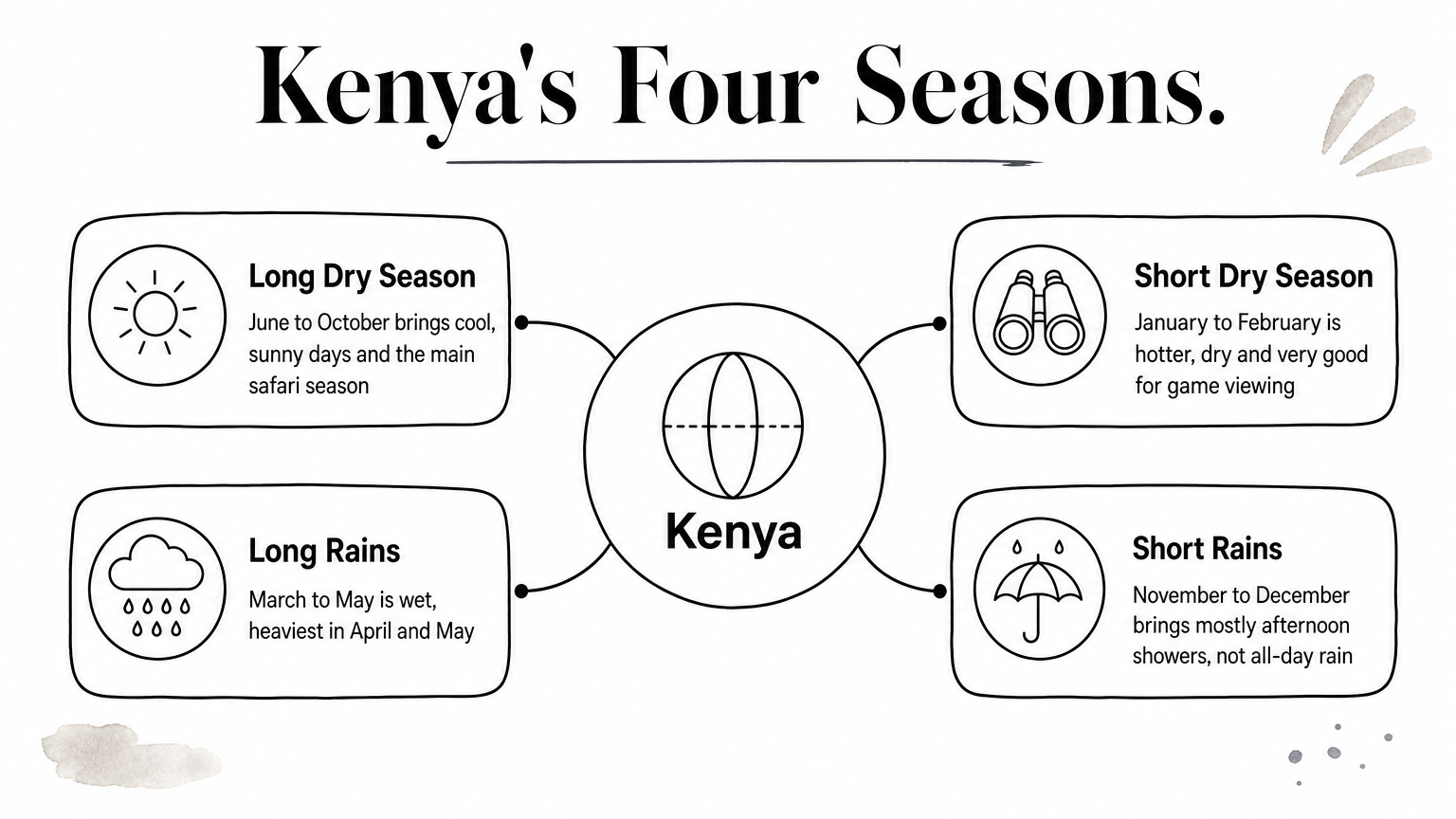
- June to October: the long dry season. Cool, sunny days and the main safari season.
- January to February: the short dry season. Hotter, dry and very good for game viewing.
- March to May: the long rains, heaviest in April and May.
- November to December: the short rains, usually afternoon showers rather than all-day rain.
Kenya’s two dry seasons, June to October and January to February, make animals easiest to find.
What the season changes on game drives
In the dry months, animals concentrate along rivers and waterholes, so you see more in less time. In the rains, the parks turn green, animals spread across the plains and some tracks turn to mud.
Crowds follow the weather. July to October is peak season and April to June is low season. Lodge and camp rates move with it and change from year to year, so ask for a current quote instead of trusting an old figure.
How to choose the best month for your goals
Start with the one thing you most want to see, then pick the month that serves it. A single "best month" for everyone does not exist, and that is a good thing, because Kenya rewards almost every calendar.
If the Great Migration is your priority
Plan for late July to early October, with river crossings usually at their most dramatic in August and September. The herds follow the rain, so timing shifts from year to year and no operator can guarantee a crossing on a given day. Give yourself at least two full days at the river.
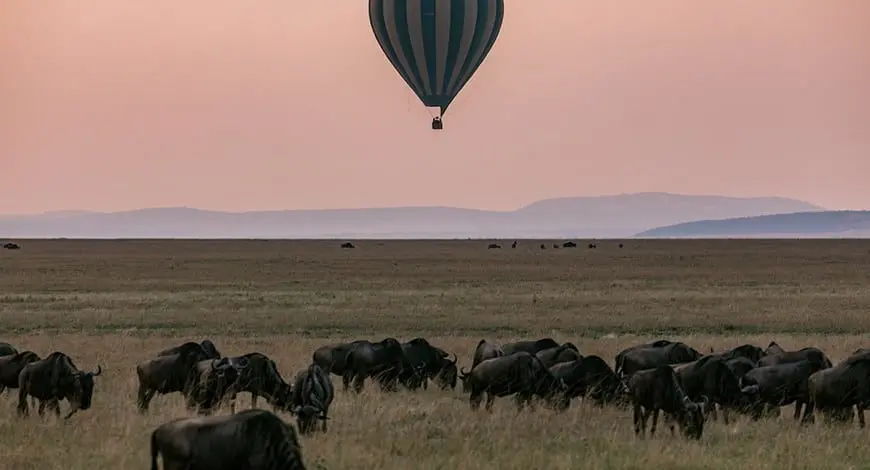
Our own camp on the Talek River in the Maasai Mara, with six en-suite tents and a family tent, puts you in the right place for those days. You can see it on the private Mara camp page. Our 4 Days Masai Mara safari (BCL 3A) includes a full day along the Mara River looking for crossings. A hot air balloon safari is an optional extra on that trip at US$475 per person. Our 6 Days Masai Mara Wildebeest Migration Special has a balloon safari with bush breakfast built into Day 3.
For the Migration, aim for August and September, and budget at least two days at the river.
If you want Kenya beyond the Migration
Each park has its own character, and the best month changes with it.
- Amboseli: elephants walking beneath Mount Kilimanjaro. Views are clearest on dry-season mornings.
- Samburu and Buffalo Springs: Grevy’s zebra, reticulated giraffe, gerenuk, beisa oryx and Somali ostrich. Dry months pull wildlife toward the Ewaso Nyiro River.
- Lake Nakuru: rhinos and rich birdlife. Flamingo numbers shift with water levels, so ask before you count on them.
- Tsavo: the famous red-dusted elephants, best seen in the dry months.
- Birdwatching: November to April, when migratory birds join more than 1,000 resident species.
- Coast: the beaches of Diani, Watamu, Malindi and Lamu are best from January to March and July to October. Diving and snorkelling are generally best from October to March. Humpback whales pass from roughly July to October, and dolphins are seen year-round. Rain is heaviest in April and May.
Kenya month by month: weather, wildlife and crowds
January, February and July to October are the busiest and driest months. March to May and November are the quietest and greenest. This table sets the whole year side by side.
The full-year comparison
| Month | Weather | Wildlife highlights | Crowds |
|---|---|---|---|
| January | Hot, dry, sunny | Short grass, easy plains game, migratory birds | High |
| February | Hot, dry | Excellent in Samburu and Amboseli | High |
| March | Warm, first showers late | Greening parks, fewer vehicles | Low |
| April | Heavy long rains | Lush scenery, newborn animals | Lowest |
| May | Wet and cloudy | Green landscapes, birds | Lowest |
| June | Rains ease, cooler | Dry season starts, herds gather near the Mara | Rising |
| July | Dry, cool, sunny | Migration arrives, first crossings | High |
| August | Dry, cool | Peak river crossings | Peak |
| September | Dry, warmer | Crossings continue | Peak |
| October | Dry, warm, showers late | Herds begin heading south | Moderate to high |
| November | Short rains, afternoon showers | Green, birds, quiet parks | Low |
| December | Mixed dry spells and showers | Good game viewing, festive season | High at holidays |
August and September are the busiest and most dramatic months, while April and May are the quietest.
Shoulder months worth a second look
Late June, October and November are often the smartest picks if you want good wildlife without peak crowds. Late June and October sit just outside the peak, and the Mara still holds plenty of resident lions, elephants and cheetahs. November brings green landscapes, dramatic skies and fewer vehicles at each sighting, which photographers tend to love. Showers usually arrive in the afternoon, so mornings stay good for game drives.
When to avoid Kenya and how long to stay
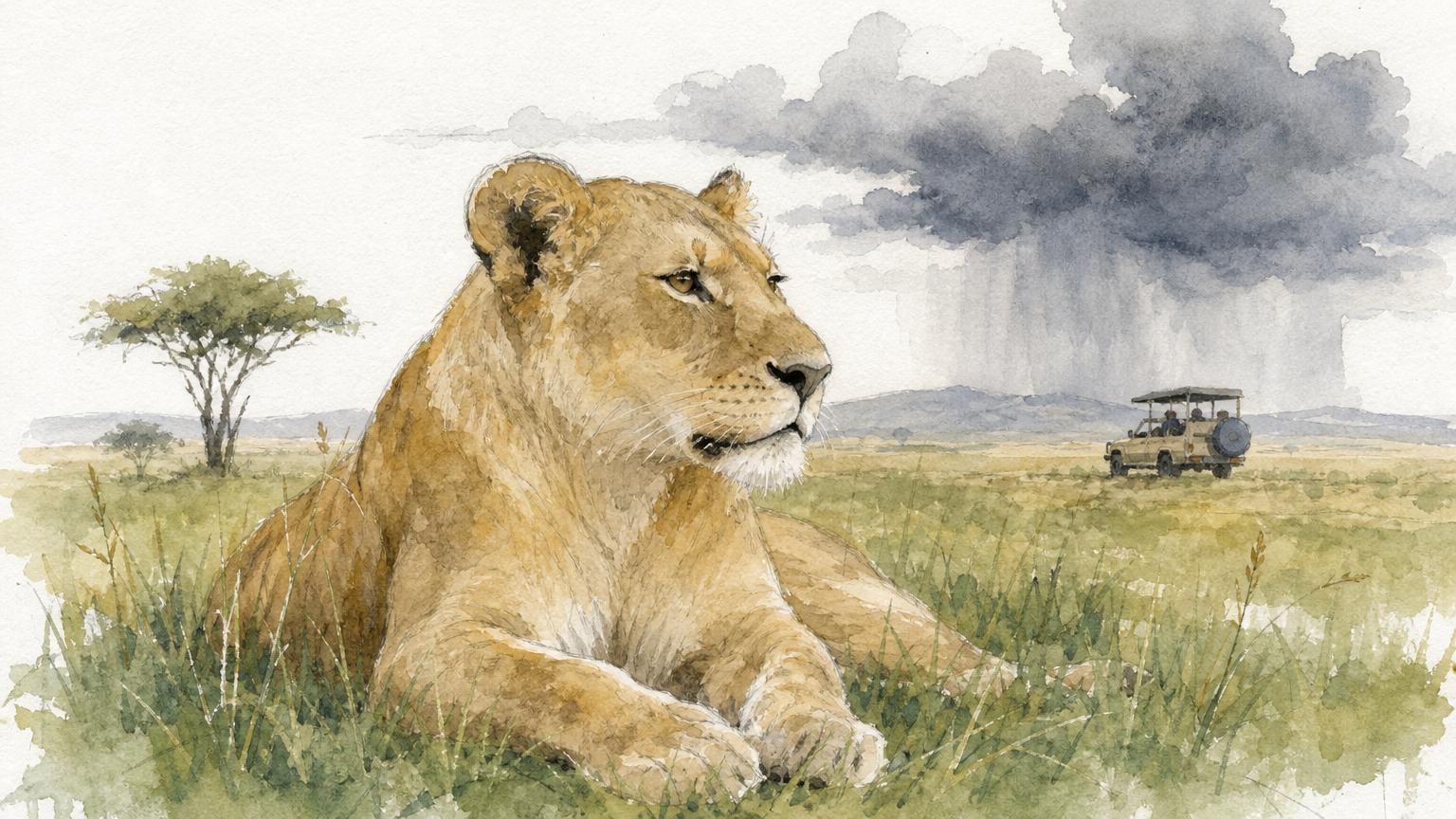
The worst time to visit Kenya for most travelers is April and May, when the long rains make some tracks muddy and skies stay grey. It is not a bad time for everyone. If you want green landscapes, empty parks and the lowest rates, it can suit you well. The downside is that you may spend more time on slow roads.
Crowds, rain and Tanzania
If crowds bother you more than rain, skip August and September in the Mara and try late June or October. If you are weighing Kenya against Tanzania, the Mara River crossings are the same Migration seen from the Kenyan side, from July to October. Calving in the southern Serengeti happens earlier in the year, around January to March. Many travelers pair the two, and we arrange Tanzania extensions as a secondary option.
How many days you need
Allow three days for the Mara alone. Four or five days covers two parks, such as the Mara and Lake Nakuru. A week lets you add Amboseli or Samburu. Ten days covers the Kenya classic circuit of Maasai Mara, Lake Nakuru, Samburu, a tree hotel and Amboseli, with a beach extension on the Indian Ocean coast or in Zanzibar if you want to finish on the sand. Before you book, check the U.S. State Department’s current travel advisory for Kenya, because advisories change.
Three days is the minimum for the Mara, and a week is the point where you start seeing Kenya’s variety.
Picking your month
For the Migration, choose late July to September. For variety and fewer crowds, pick January to February, late June, October or November. For beaches, aim for January to March or July to October. The rains are rarely a reason to stay home, only a reason to adjust your expectations.
If you want a month matched to your priorities, ask for a personalized Kenya safari quote from our Nairobi team.
Call or WhatsApp on +254 723 166170, call +254 733 630053, email reservations@bestcampingkenya.com or visit bestcampingkenya.com to plan your trip with Best Camping Tours & Safaris.
One Response