
The wildebeest migration crocodile encounter is an ambush. Each year the herds of the Great Migration reach the Mara River, and Nile crocodiles wait in the water at the crossing points. They strike as the animals enter or leave the river and drag them under to drown. Crocodiles take only a small share of the herd, though. Drowning, trampling and injury kill far more animals than teeth do.
This article explains why the crossings are so dangerous, how crocodiles hunt wildebeest in the water, and how to watch a crossing in person without harming the animals or yourself. If you have seen the dramatic documentary clips, you will also learn what they leave out: hours of waiting, false starts, and herds that turn back at the last moment.
Best Camping Tours & Safaris has run safaris from Nairobi since 1986, and our driver-guides spend whole days at the river reading the herds. What follows is the practical picture we give guests, plus a few ideas for what to add to a Kenya trip when the river is quiet.
Why crocodiles make river crossings so dangerous
Crossings are dangerous because the herd cannot avoid the river and the crocodiles do not need to chase anything. The animals must pass a few predictable places, and the predators simply wait there.
Why the herds cross at all
The herds cross because the grass is on the other side. When the dry season parches the southern Serengeti, the animals move north toward the Mara, and the Mara River blocks the way. Wildebeest have no leader, so a crossing is decided by collective nerves. Thousands bunch along the bank, mill up and down, and wait until one or two animals commit. Then the whole group surges down the bank.
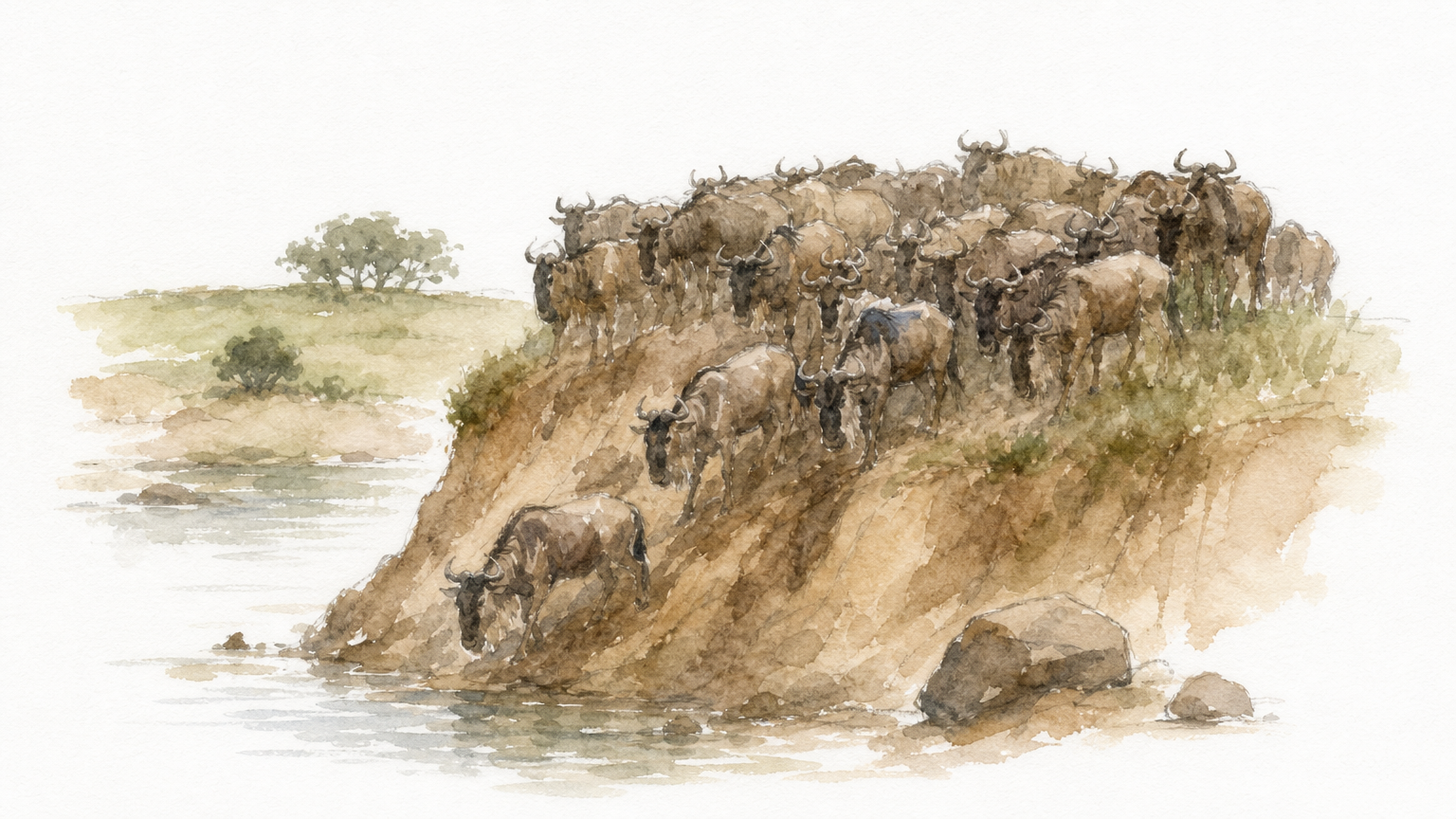
In Kenya the crossings generally fall between July and October, with the busiest days in August and September. Some herds cross back south later in the year.
How dangerous a crossing really is
The crocodile is only one of several threats. Commonly cited estimates put migration deaths from all causes at roughly 250,000 animals a year. Some estimates suggest around 50 wildebeest drown for every one a crocodile kills.
| Risk | What happens |
|---|---|
| Drowning and trampling | Animals slip on steep banks and are pushed under by the herd behind them |
| Crocodile ambush | Nile crocodiles strike at the bank and in the shallows |
| Injury | Broken legs from jumping banks or rocks leave animals slow and exposed |
| Separated calves | Young animals lose their mothers in the current and are easy prey |
The dead are not wasted. Carcasses drift downstream and feed crocodiles, vultures, Marabou storks and fish, and the nutrients help sustain the river.
The herd crosses because the grass demands it, and the crocodiles wait at the one place every animal must pass.
How crocodiles hunt wildebeest in the water
A crocodile hunts wildebeest by waiting submerged at the crossing, seizing an animal as it enters the water, and holding it under until it drowns. It spends almost no energy on the hunt.
The ambush at the water’s edge
Nile crocodiles are patient. They float with only their eyes and nostrils above the surface and gather at known crossing points. Big Mara crocodiles reach 14 feet or more. They do not chase over distance. The strike comes from the water, within about a body length of the bank, and the jaws close on a leg, muzzle or neck.
A single large kill can feed a big crocodile for many weeks. That is why many animals cross without being touched, and why clips sometimes show a wildebeest swimming away unharmed while the crocodile goes hungry.
After the strike: the drag, the roll and the shared kill
What follows usually runs in a set order:
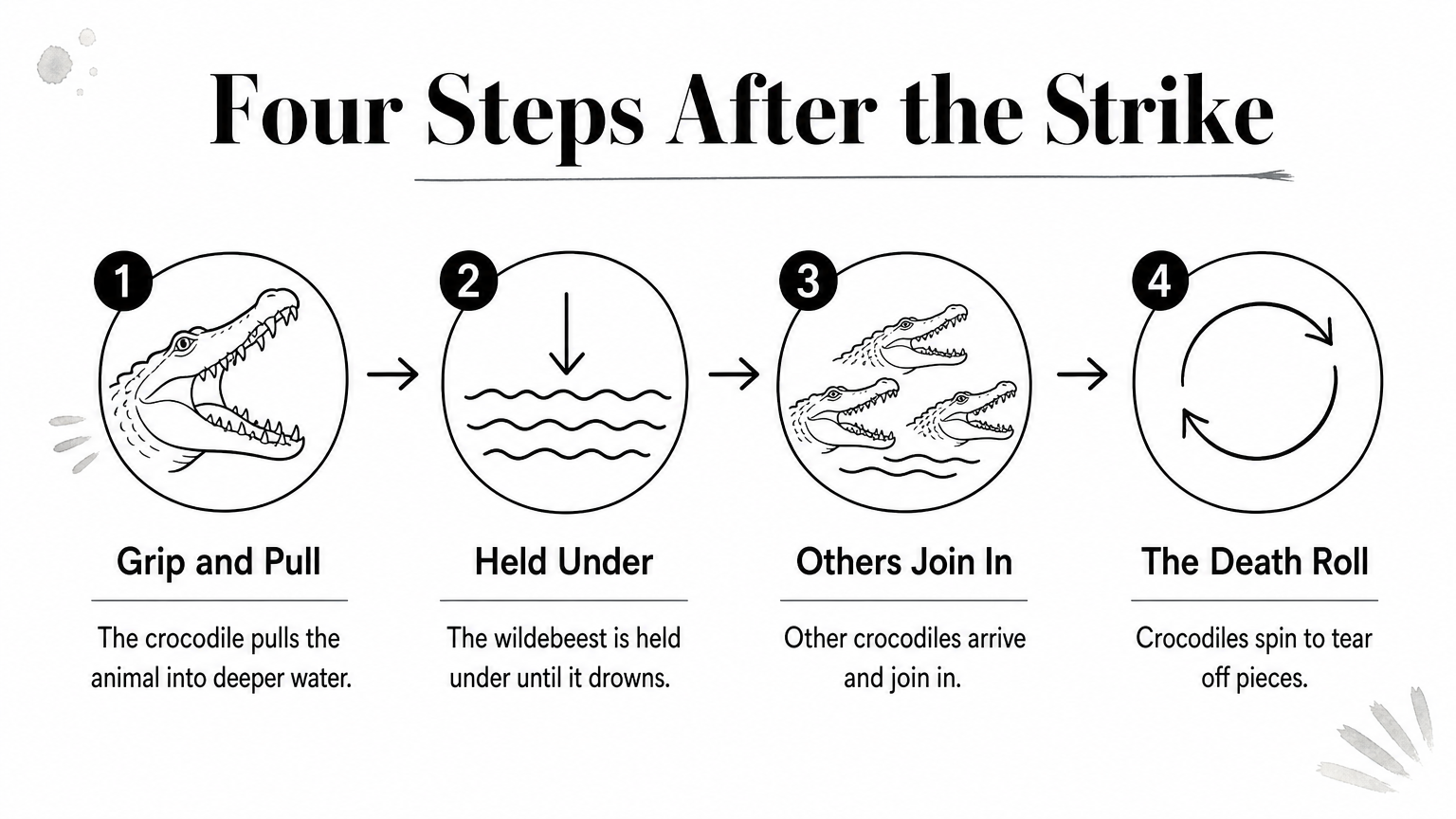
- The crocodile grips and pulls the animal into deeper water.
- The wildebeest is held under until it drowns.
- Other crocodiles arrive and join in.
- The crocodiles perform the death roll, spinning to tear off pieces.
A struggle can last as long as 15 minutes when a determined wildebeest meets a large crocodile. Crocodiles also work together to pull down bigger animals, and they feed on drowned carcasses as well as fresh kills. Most of what looks like a hunt in the footage is really this scramble after the first grab.
A crocodile does not hunt the herd. It waits for the one animal that stumbles within reach.
How to watch a crossing in person
To see a crossing yourself, be in the Mara between July and October, give yourself at least two full days along the river, and let your driver-guide choose where to park. No operator can promise a crossing on a given day.
Timing and patience
Herds can stand at the bank for hours, then turn back and return the next day. A crossing is never scheduled, so the best plan is time on the river. Our 4-day lodge safari, BCL 3A, devotes a full day along the Mara River to searching for the wildebeest and zebra crossing, with a picnic lunch at the Hippo Pool. We run it in a custom minibus or a Land Cruiser with a pop-up roof, with a maximum of six passengers per vehicle.
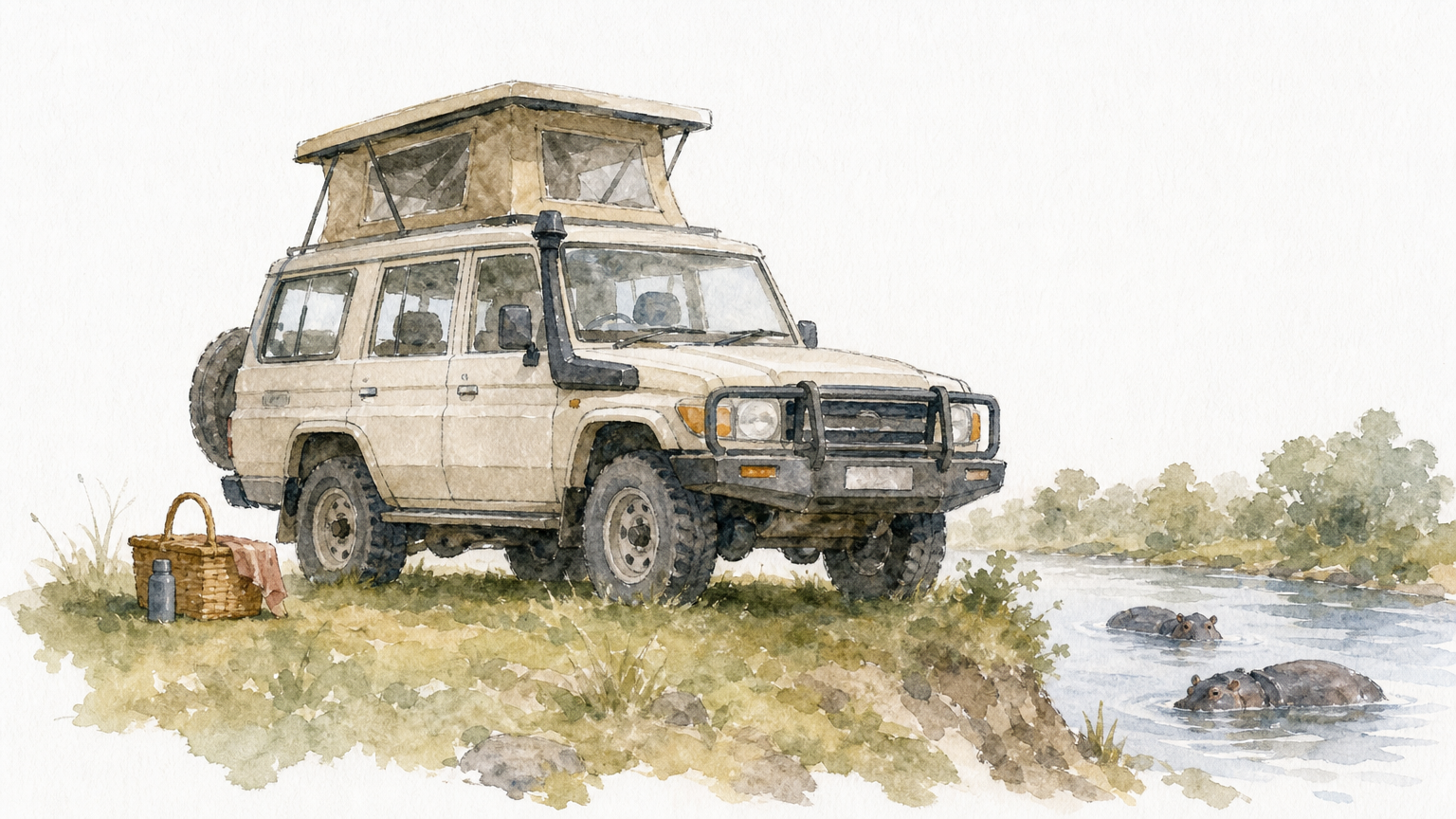
If you prefer to sleep close to the action, our private camp on the Talek River has six en-suite tents plus a family tent, hot showers, home-style meals and campfire evenings. Where arrival times allow, a game drive can start on your first day. Ask us for a current quote.
Rules that keep you and the herd safe
Good crossing etiquette protects the animals and gives you a better view:
- Stay inside the vehicle at all times and never walk toward the bank.
- Park at a distance and never block the crossing point, because crowded vehicles can make the herd turn back.
- Switch off the engine and keep voices low.
- Bring a 200 to 400 mm lens, burst mode and a shutter speed of 1/1000 second or faster.
- Pack water, sun protection and a hat, because waiting is long and shade is scarce.
The best crossing photographs belong to the people who wait quietly, far enough back for the herd to commit.
What else to see in Kenya beyond the river
The crossing is one season of a country that offers wildlife all year, and the parks look nothing alike. A good itinerary adds variety so the trip does not hinge on one event.
Other parks with crocodiles and wildlife
| Place | What stands out |
|---|---|
| Samburu and Buffalo Springs | Nile crocodiles on the Ewaso Ng’iro River, plus Grevy’s zebra, gerenuk and reticulated giraffe |
| Tsavo West | Hippos and crocodiles at Mzima Springs, in red-earth landscapes |
| Amboseli | Large elephant herds with Mount Kilimanjaro behind them, plus swamp birds |
| Lake Naivasha | Hippos, boat trips and abundant birdlife |
| Lake Nakuru | Rhinos and rich birdlife |
Add the coast
After the bush, the Indian Ocean coast offers beaches, snorkelling and scuba diving, dolphin and whale watching, day excursions, nightlife and a strong food culture. We can arrange stays in Diani, Watamu, Mombasa, Malindi and Lamu, and in Zanzibar, so one holiday covers both worlds.
A Kenya trip built only around the crossing misses most of what the country offers.
Seeing the crossing for yourself
Crocodiles are a real but modest part of the danger at the Mara River. The herds cross because they must, the crocodiles ambush from the water’s edge, and drowning kills far more animals than teeth. Watching it well takes patience, a good position and a guide who knows when to stay and when to move.
If you want to plan a Mara safari timed for the crossings, with other Kenya parks and the coast added, contact us for a tailor-made quote.
Call or WhatsApp on +254 723 166170, call +254 733 630053, email reservations@bestcampingkenya.com, or visit bestcampingkenya.com.