
Samburu National Reserve is a 165 km² (64 sq mi) game reserve in Samburu County, northern Kenya. It sits on the banks of the Ewaso Ng’iro River, about 350 km (220 miles) north of Nairobi. It is famous for the Samburu Special Five, rare dry-country species you will not see in Kenya’s southern parks. The best months to go are June to September and January to February, and you can reach it by a long day’s drive or a short flight from Nairobi.
At first glance the reserve looks empty. Baked brown earth runs toward the hills, then the river appears, lined with doum palms and acacia, and the animals follow. Large elephant herds, leopards in the riverside trees, cheetah on the open ground and more than 450 bird species share a compact area. Elsa the lioness of Born Free fame was also raised partly in this reserve by Joy and George Adamson.
This guide covers why Samburu belongs on your Kenya itinerary, which wildlife to expect, how to get there from Nairobi and when to go. It also explains how entry fees work and where to stay. Best Camping Tours & Safaris has run guided Kenya safaris from Nairobi since 1986, and Samburu features in several of our itineraries, so the practical advice here comes from the route itself.
Why Samburu deserves a place on your Kenya safari
Samburu deserves a place on your itinerary because it offers rare dry-country wildlife you will not see in the Masai Mara or Amboseli. It does this in a compact, scenic reserve that rewards a stay of two nights or more. It also shows you a side of Kenya that has nothing to do with the migration.
What makes Samburu different from the southern parks
The difference is the climate. Samburu is semi-arid, so the Ewaso Ng’iro River is the lifeline. Animals travel to it, which concentrates sightings along a green belt of doum palms, tamarind and acacia. Behind the belt lie dry scrub, termite mounds, Koitogor Hill in the middle of the reserve and austere mountains to the north.
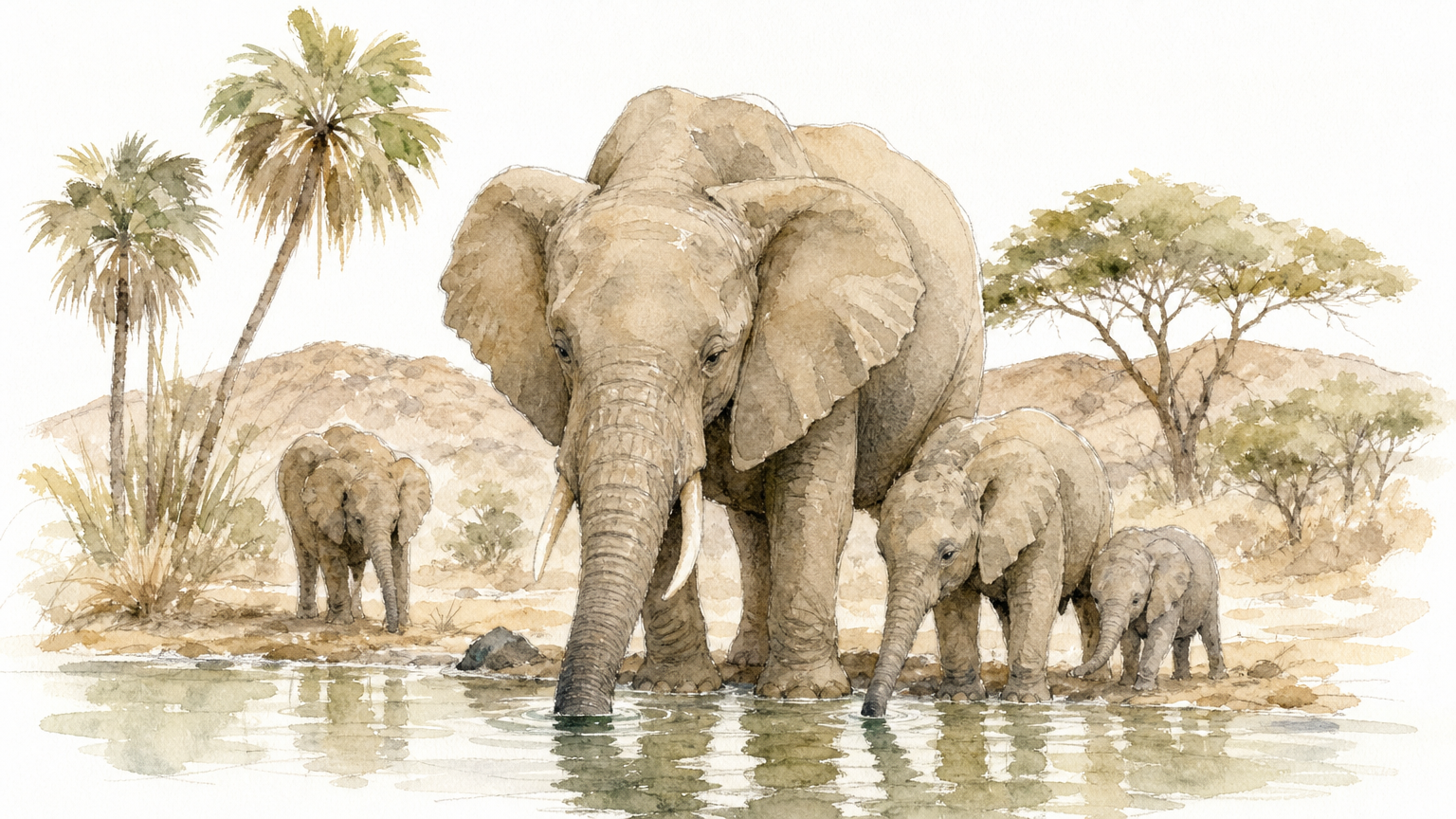
The reserve also forms one wildlife area with Buffalo Springs National Reserve to the south and Shaba National Reserve to the east, and animals move freely between the three. Four of the Big Five live here: elephant, lion, leopard and buffalo. There are no rhinos. Samburu is also the home country of the Samburu people, and a village visit with a local guide can often be arranged outside the reserve.
Samburu gives you rare northern wildlife along one green river, in a reserve small enough to cover well in two days.
Samburu compared with the Masai Mara
Samburu is not better or worse than the Masai Mara, only different. The table shows where each one wins.
| Feature | Samburu | Masai Mara |
|---|---|---|
| Size | 165 km² | About 1,510 km² |
| Scenery | Semi-arid scrub, river belt, hills | Open grass plains, riverine woodland |
| Signature wildlife | Special Five, elephants, leopards | Great Migration herds (roughly July to October), lions, large cat populations |
| Big Five present | Four (no rhino) | All five |
| Best months | June to September, January to February | July to October for river crossings, good wildlife all year |
Choose Samburu for rare species and quiet river sightings, and the Mara for scale and the migration. If you want comfortable camping in the Mara, our private Talek River camp has six en-suite tents, hot showers and home-style meals, and it pairs well with a northern leg.
Samburu wildlife: the Special Five and much more
Samburu’s wildlife splits into two groups. The Special Five are northern species that define the reserve, and everything else is a rich mix of elephants, big cats, river animals and birds. Plan your game drives around both.
The Samburu Special Five
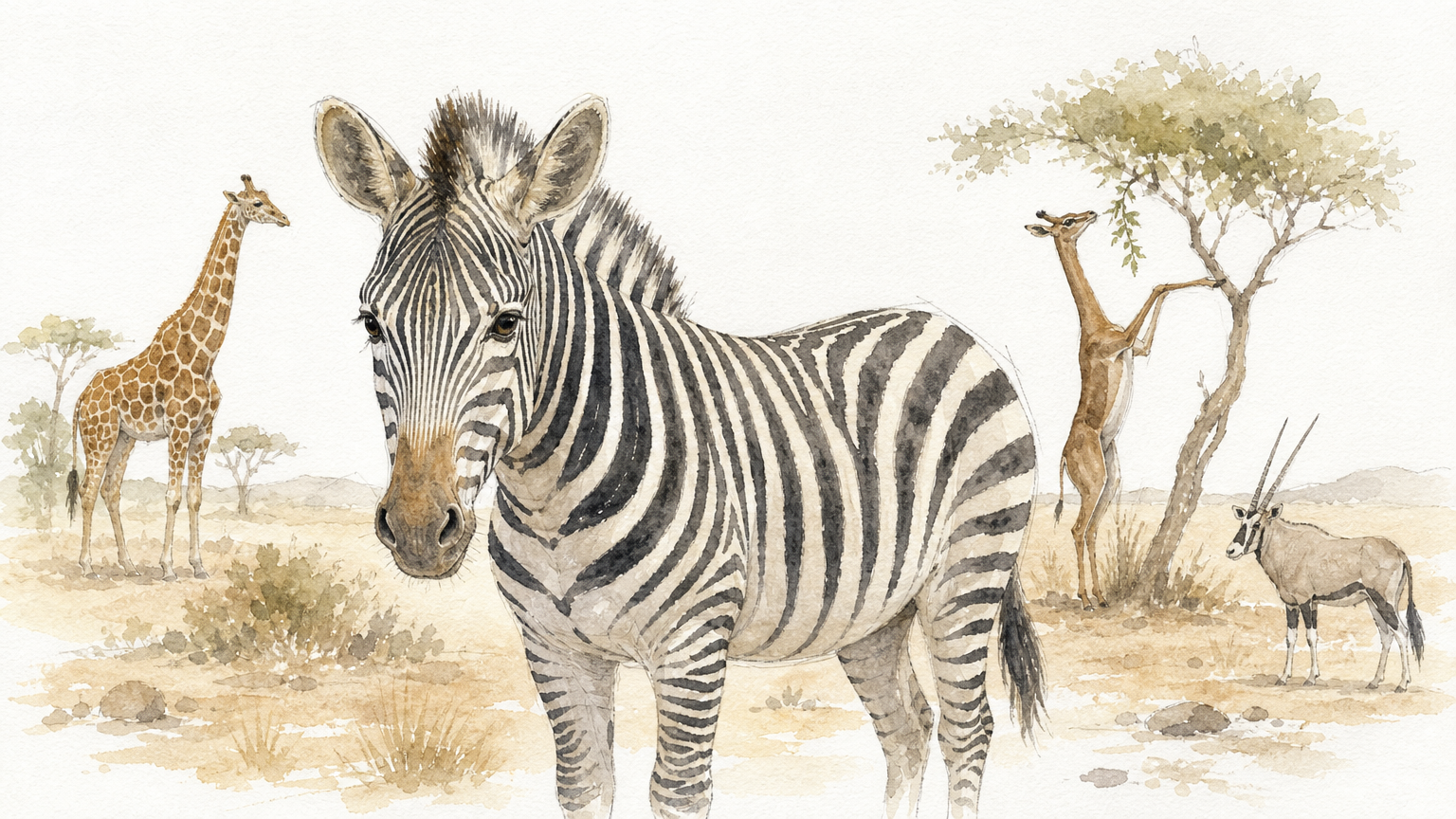
The Special Five are the dry-country species found in Samburu, Buffalo Springs and Shaba but not in the southern parks. Learn to recognize them before you arrive.
| Species | How to recognize it | Why it matters |
|---|---|---|
| Grevy’s zebra | Narrow, dense stripes, white belly, large round ears | Endangered, and northern Kenya holds most of the world’s remaining animals |
| Reticulated giraffe | Sharp-edged, liver-colored patches split by thin white lines | Looks very different from the Masai giraffe of the south |
| Somali ostrich | Males have a blue-grey neck and thighs | Replaces the pink-necked Masai ostrich seen in the south |
| Gerenuk | Slender antelope with a very long neck | Stands on its hind legs to browse acacia |
| Beisa oryx | Long straight horns, black-and-white face | Built for dry country and often seen in small herds |
Elephants, big cats, and everything else
Elephants are the stars. Family herds cross the reserve and gather at the river in the dry months, and you can watch them from close range. Leopards are commonly seen near the riverside trees, and lions and cheetah patrol the open ground. Wild dogs are an occasional bonus, and spotted hyenas hunt at night.
Beyond the cats you will also meet buffalo, waterbuck, impala, Grant’s gazelle, olive baboons and tiny Guenther’s dik-dik. Nile crocodiles and hippos live in the river. The bird list passes 450 species, including vulturine guineafowl, martial eagle, bateleur, pygmy falcon, white-headed vulture and Taita falcon. Birds are at their most vibrant from November to April.
Conservation work around the reserve
Samburu supports long-running research and community projects. Save the Elephants studies elephant behavior here, Ewaso Lions works with local Samburu warriors to reduce conflict with livestock, and the Grevy’s Zebra Trust protects the species with community scouts. Community conservancies on the reserve’s borders add more protected ground, and the Reteti Elephant Sanctuary in the Namunyak Conservancy rescues orphaned elephants.
Your visit helps. Entry fees and lodge stays bring income to a county where wildlife and pastoral communities share the same land. Choosing a guide who explains this work makes the safari richer.
Samburu’s Special Five exist in only a few northern reserves, so seeing them is the main reason to make the journey north.
How to get to Samburu from Nairobi and when to go
You reach Samburu from Nairobi by driving about 350 km north, which takes roughly six hours plus stops, or by flying to a reserve airstrip. An early road start gets you there in time for lunch and a first game drive.
Getting there by road or air
Our Samburu itineraries start at 06:30 and follow the road north through central Kenya. The route is simple:
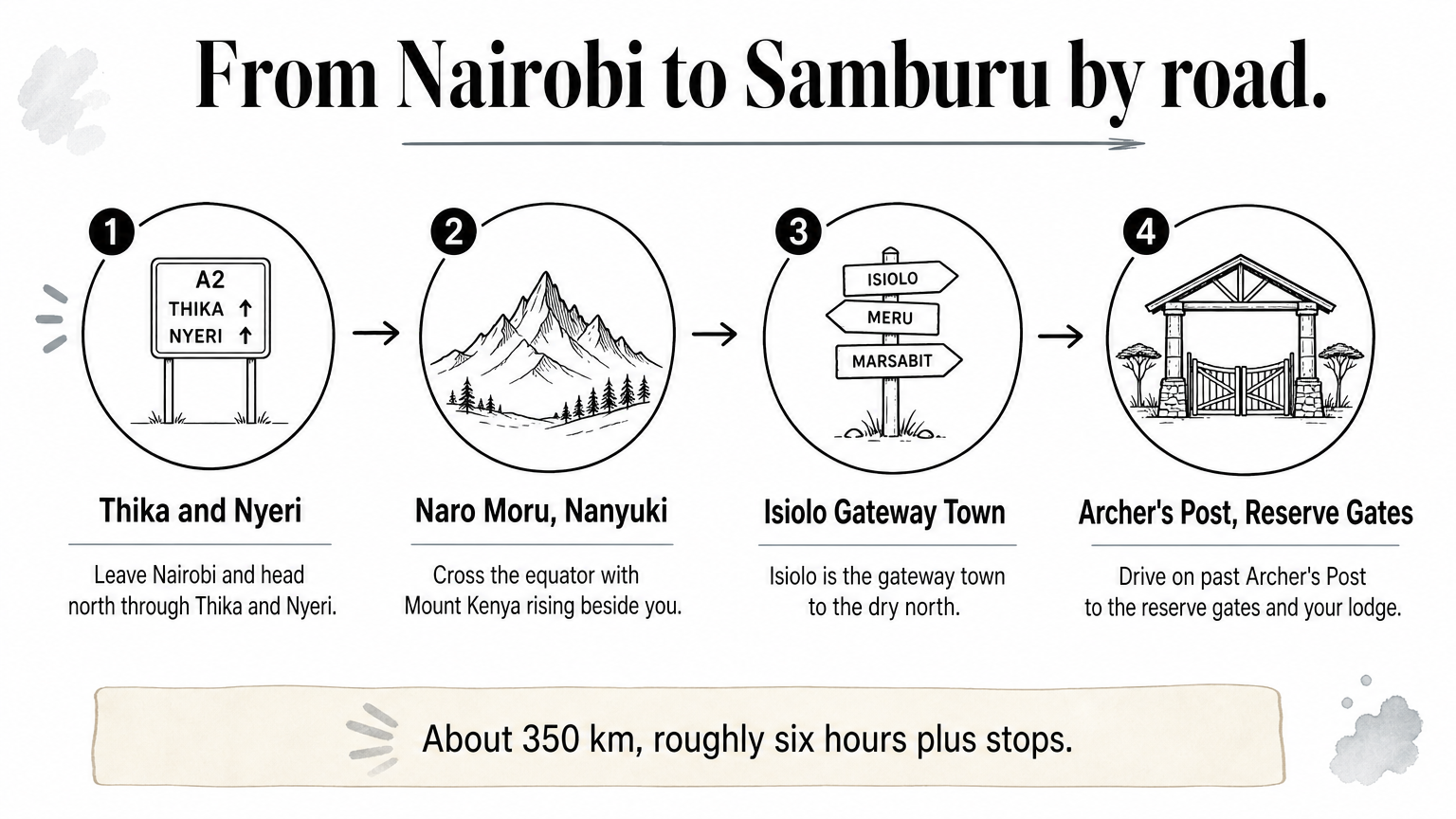
- Leave Nairobi and head north through Thika and Nyeri.
- Pass Naro Moru and Nanyuki, where the road crosses the equator and Mount Kenya rises beside you.
- Continue to Isiolo, the gateway town to the dry north.
- Drive on past Archer’s Post to the reserve gates and your lodge.
Allow about six hours of driving plus breaks, and expect dust and heat as the road drops toward the reserve. If you are short on time, a flight from Wilson Airport to a reserve airstrip cuts the journey to a short hop. We can arrange either option, and a driver-guide in a pop-up-roof vehicle is the best way to cover the reserve once you arrive.
Best time to visit Samburu
The best time to visit Samburu is the dry months of June to September and January to February. Vegetation is thin, roads are good, and wildlife concentrates along the river.
| Months | Conditions | What you gain |
|---|---|---|
| June to September | Driest, dusty and hazy | Best game viewing, as animals depend on the river |
| January to February | Hot and dry | Another strong window for wildlife |
| October to May | Wetter season, patchy rain in the north | Greener scenery, with birdlife at its best from November to April |
High season runs December to March and July to October, so book early for those months. Days are very hot, but temperatures drop sharply at night, so pack a warm layer for dawn drives. Samburu is open all year, and its July to October dry spell matches the Mara migration, which makes a combined trip easy.
Go in June to September or January to February for the strongest wildlife viewing, and in the wetter months if birds matter most.
Fees, lodges, and how to plan your Samburu stay
Plan at least two nights in Samburu so you get several game drives, and budget for park entry fees, which are charged per person per day. Our team will confirm current fees for your dates.
How entry fees work
The reserve is managed by the Samburu County Government, not by Kenya Wildlife Service, so its tariff is set locally. Fees are charged per person per 24 hours, with separate rates for non-resident adults, children and residents. The tariff is revised from time to time, so rely on a current quote, not an old figure.
On our guided safaris, all national park and national reserve entrance fees are included in the package, and trips run on a private basis with a maximum of six people per vehicle. Safari rates change, so contact us for a current quote on your dates.
Where to stay and how long to allow
On our Samburu circuit we cover Samburu, Buffalo Springs and Shaba together. We use Samburu Simba, Samburu Sopa, Sarova Shaba, Ashnil Samburu and Nasulu, a new camp that has just opened. Because we work directly with these lodges and camps, we can match the stay to your style and budget.
Samburu fits into longer Kenya routes. These itineraries include it:
| Itinerary | Length | Route |
|---|---|---|
| BCTS 6B | 7 days, 6 nights | Samburu, Lake Nakuru, Masai Mara |
| BCTS 11A | 8 days, 7 nights | Mt. Kenya, Samburu, Lake Nakuru, Masai Mara |
| BCTS 11 | 10 days, 9 nights | Masai Mara, Lake Nakuru, Samburu, Mt. Kenya, Amboseli |
The 10-day Kenya classic outline gives Samburu two nights.
Check independent reviews before you book
Before you pay for any safari, read what recent travelers say about the operator. Look for comments on driver-guide knowledge, vehicle condition and how problems were handled on the road. Compare several sources, not one.
You can read the traveler feedback on our TripAdvisor reviews page. We are a family-run, government-licensed company, affiliated with the Kenya Association of Tour Operators (KATO) and licensed by the Tourism Regulatory Authority (TRA).
Planning your Samburu safari
Samburu National Reserve rewards you with the Special Five, big elephant herds, leopards and a rich bird list, all along one green river in northern Kenya. Go in the dry months, give it two nights, and pair it with the Masai Mara or Lake Nakuru for a fuller picture of the country.
When you are ready to turn this into a route, ask our team for a current Samburu quote. We will build the itinerary around your dates, interests and budget.
To plan with Best Camping Tours & Safaris, call or WhatsApp on +254 723 166170, call +254 733 630053, email reservations@bestcampingkenya.com or visit bestcampingkenya.com.