
Aberdares National Park is a protected highland park in central Kenya, roughly 150 to 180 km north of Nairobi, depending on the gate. It is a cool, misty volcanic range of moorland, bamboo and rainforest, a long way from the open grassland most people picture on a Kenya safari. The park was established in May 1950 and sits on the eastern rim of the Great Rift Valley, across Nyeri and Nyandarua counties.
This guide covers what the park offers, from its landscapes and wildlife to the way it is protected. It also covers what you can do there, where you sleep, and how to plan a visit, including the best season, the gates, how park fees work, and which other parks pair well with it.
Best Camping Tours & Safaris has run Kenya safaris from Nairobi since 1986. Our itineraries include the Aberdares, with a night at The Ark, so what follows comes from routing real trips through the park.
Why Aberdare National Park is worth a visit
The park shows you a side of Kenya that the savannah reserves cannot: mist, moorland, waterfalls and forest animals that come to you at a waterhole. It is small and compact, so it works as a contrast stop rather than a replacement for the bigger parks.
A highland park unlike Kenya’s savannahs
Most Kenya parks are open plains where you drive to find animals. Here, dense forest and high moorland change the rhythm. You see animals at waterholes and in clearings, often from a lodge deck, and the weather can turn from sun to mist within an hour.
| Fact | Detail |
|---|---|
| Location | Central Kenya, Nyeri and Nyandarua counties |
| Distance from Nairobi | About 150 to 180 km, depending on the gate |
| Established | May 1950 |
| Size | Roughly 770 square kilometers |
| High point | Ol Donyo Lesatima, about 4,000 m |
| Entry gates | Eight: Shamata, Ark, Kiandongoro, Treetops, Ruhuruini, Mutubio, Wanderis, Rhino |
The Aberdares trade wide-open plains for forest, moorland and close-up waterhole viewing.
Landscapes and the story behind the park
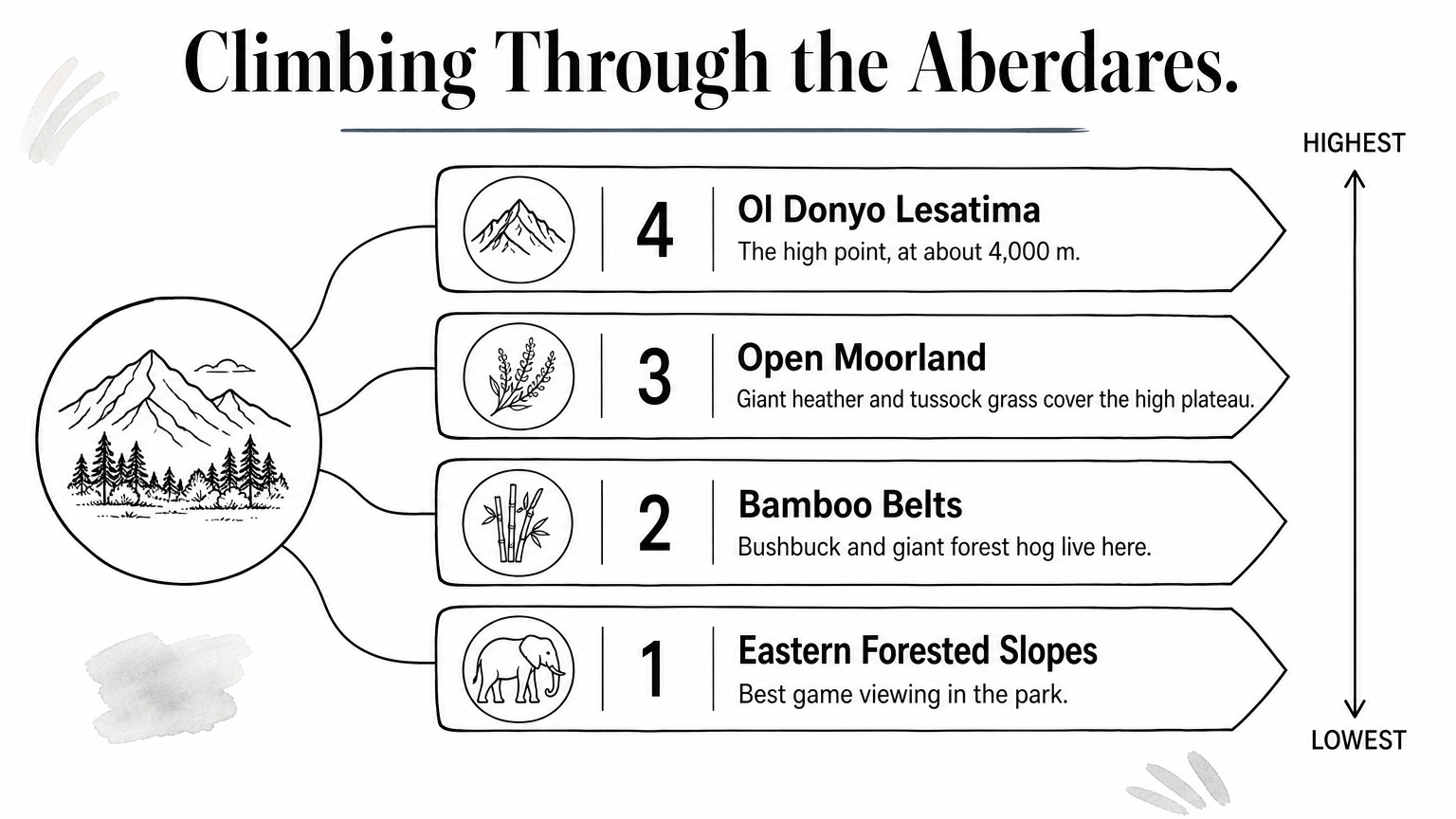
The range has distinct zones. The eastern forested slopes give the best game viewing, bamboo belts sit above them, and open moorland with giant heather and tussock grass covers the high plateau. Karuru and Gura falls drop well over 250 meters, and the Dragon’s Teeth viewpoint is a popular photo stop.
The park also has a famous footnote. In 1952, Princess Elizabeth was staying at Treetops when she learned that her father, King George VI, had died and that she was now Queen. That one night keeps Treetops on many travelers’ lists.
Wildlife and birds in Aberdare National Park
The park holds forest and moorland wildlife, from elephant, buffalo and black rhino to colobus monkeys and leopard. It also holds rarities such as the bongo and the African golden cat, plus more than 250 bird species. Much of this is different from what you see in Samburu, Amboseli or the Mara.
Mammals by habitat
Where you look matters more than how long you look. Dense forest hides animals, so the lodge waterholes do much of the work.
| Habitat | Most likely | Rare or elusive |
|---|---|---|
| Eastern forest | Elephant, buffalo, black rhino, giraffe, black-and-white colobus, olive baboon, bushbuck, waterbuck, giant forest hog, spotted hyena | Lion, leopard |
| Bamboo forest | Bushbuck, giant forest hog | Bongo, a large striped antelope |
| Moorland | Eland, serval | African golden cat |
Dark-coated servals and leopards (melanistic animals) are also recorded here, which is a rarity in Kenya. Sightings are never guaranteed, and lion and bongo are the ones to treat as bonuses.
Birds
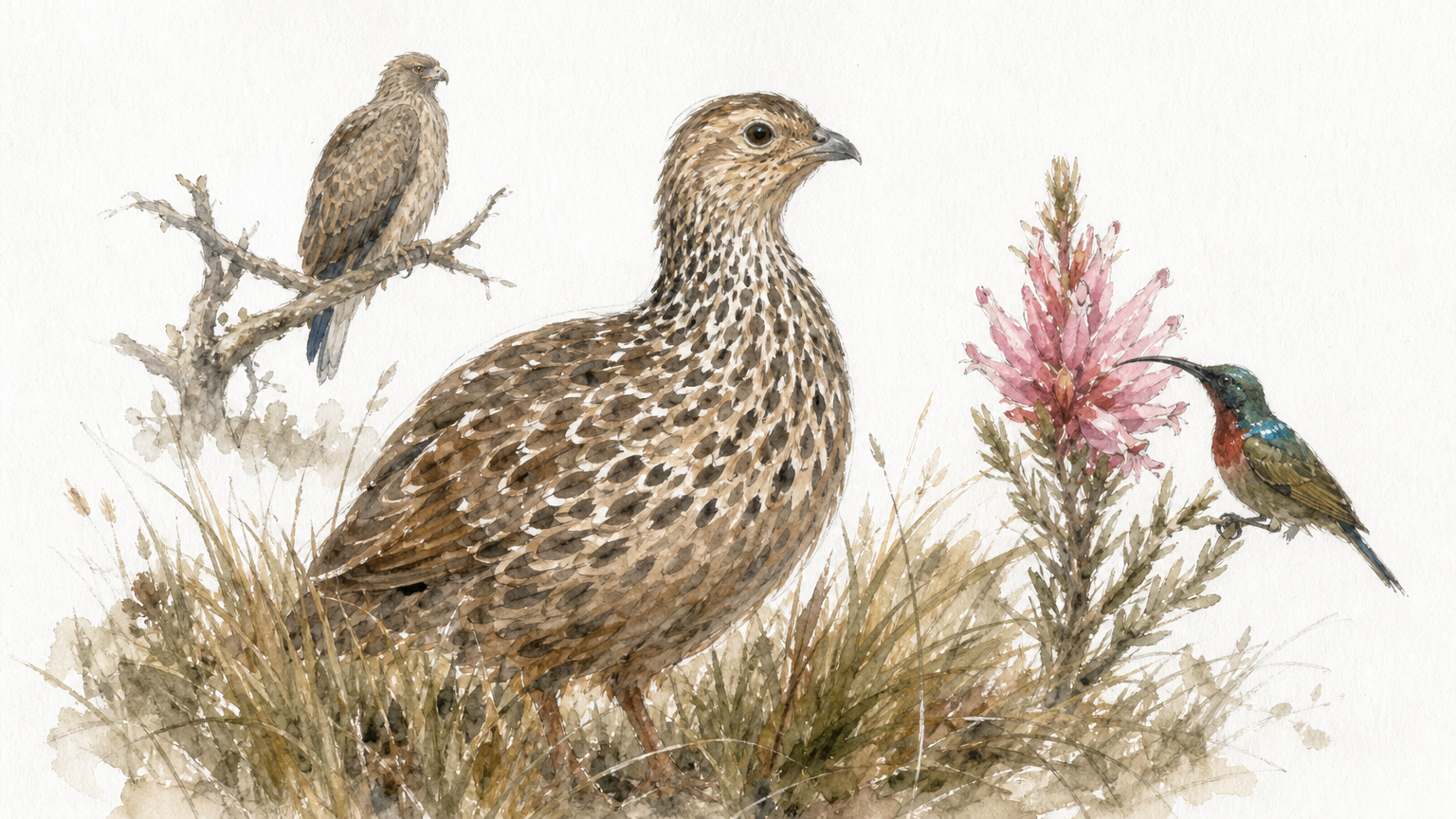
Birders get a lot from this park. More than 250 species are recorded, including Jackson’s francolin, sunbirds and plovers, plus raptors such as Ayres’ hawk eagle, rufous-breasted sparrowhawk, African goshawk and mountain buzzard. Highland birds like these will not turn up in the dry-country birdlife of Samburu, so a mixed itinerary adds species.
How the park is protected
An electric fence of roughly 400 km, built by the Rhino Ark charity around the wider Aberdare conservation area, keeps elephants and buffalo out of neighboring farms. Fewer clashes between people and wildlife means fewer retaliatory killings. The forests and moorland also act as a water catchment that feeds rivers including the Tana, so protecting the range protects water far downstream.
The fence protects both the animals and the farmers who live beside them.
Things to do and where to stay in the Aberdares
The main activities are game drives, waterhole viewing, guided walks, hiking and birding, and the classic way to stay is a night at a tree lodge. Plan to spend at least one night so you can watch the waterhole after dark.
Activities in the park
Most visitors combine a few of these:
- Game drives on forest and moorland tracks. A 4WD vehicle is wise, especially after rain.
- Waterhole and salt lick viewing from lodge decks, by day and by floodlight at night.
- Guided walks with a ranger, often to the waterfalls.
- Hiking on the high moorland, with cold, thin air at altitude.
- Trout fishing in the cold streams, where permitted.
- Birdwatching in forest clearings and on the moorland.
Tree lodges: The Ark and Treetops
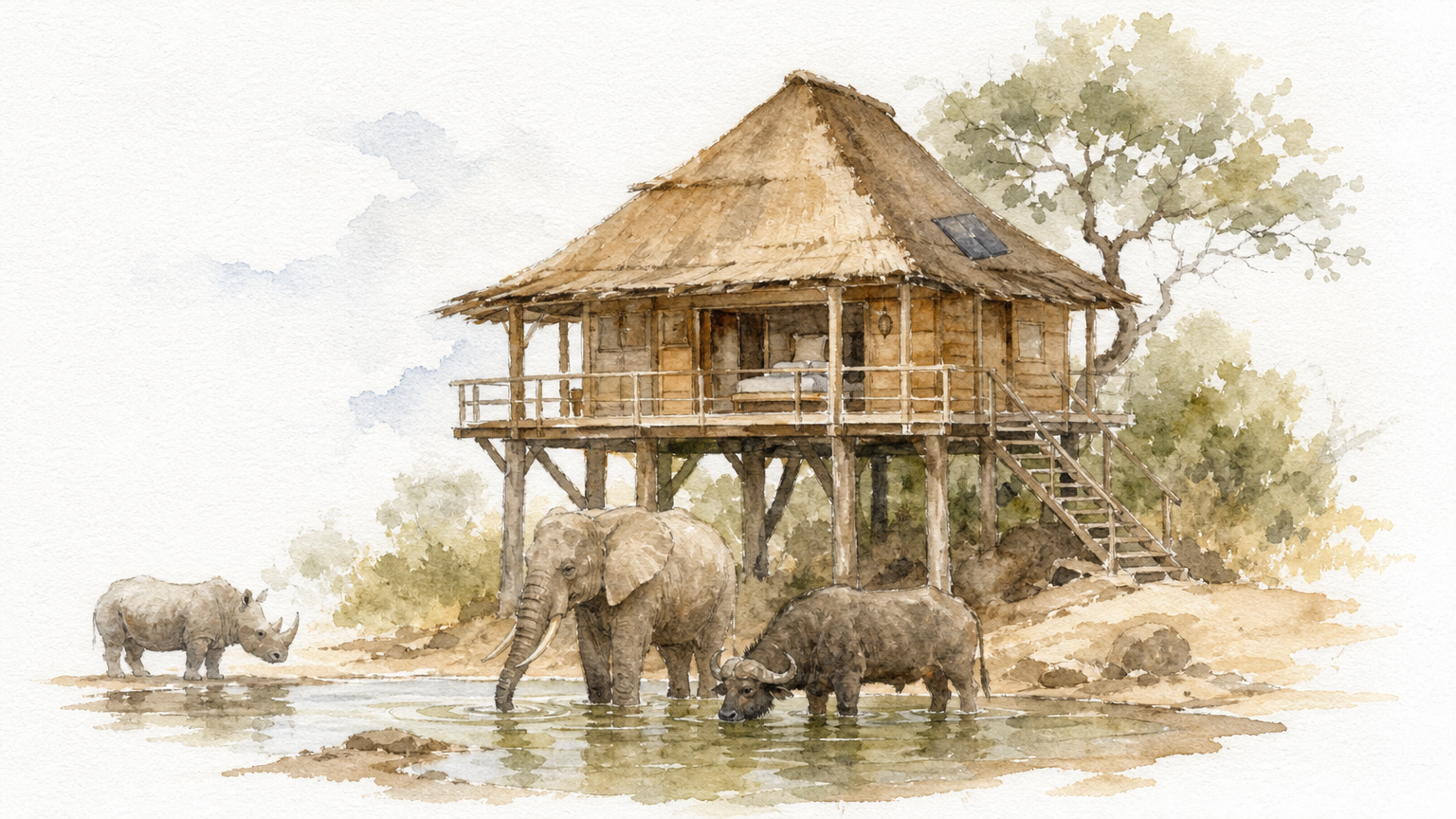
The Ark and Treetops are built on stilts above waterholes, so elephants, buffalo and rhino walk past your window. We use The Ark on our 8-day BCL 11A itinerary (Aberdares, Samburu, Lake Nakuru, Masai Mara) and on our 10-day itinerary that adds Amboseli. Rooms are small and simple, because the show outside is the point.
Rates change and depend on the season, so ask us for a current quote rather than relying on a figure from an old page.
A night at a tree lodge is the best way to see Aberdare wildlife without tracking it.
How to plan an Aberdare safari
Plan one or two nights, go in a drier month, check your gate with your lodge, and pair the park with a dry-country or plains destination. An Aberdare safari works best as one chapter of a longer Kenya route.
Best time and what to pack
The driest months are January and February, and June to September. Heavy rain falls from March to May, and the short rains come late in the year. Mist and showers can arrive at any time of year at this altitude, so pack warm layers, a rain jacket and binoculars. Nights on the high moorland can drop close to freezing.
Getting there, gates and fees
The drive from Nairobi takes roughly three to four hours to the Nyeri side. The park has eight gates, and your lodge or operator will choose the right one, since tree-lodge guests use lodge transfers for the last stretch.
Entry fees are set by the Kenya Wildlife Service. They are charged per person per 24 hours, with different rates for non-residents, residents and citizens and for adults and children, plus a vehicle fee. Fees change, so we confirm the current figures when we prepare your quote.
Treat the Aberdares as a one- or two-night stop and book in the drier months.
Combining the Aberdares with other Kenya parks
Each park has a different character, so the order matters:
- Aberdares: forest, moorland and waterhole viewing.
- Samburu: dry-country species such as Grevy’s zebra, reticulated giraffe, gerenuk and Beisa oryx.
- Lake Nakuru: rhino and rich birdlife.
- Amboseli: big elephant herds with Mount Kilimanjaro behind them.
- Masai Mara: open plains with wildlife year-round and the wildebeest migration as a seasonal highlight. Our private camp on the Talek River has six en-suite tents plus a family tent, hot showers and home-style meals, and you can read about it on the Mara camp page.
Planning your Aberdare visit
Aberdare National Park is a cool, green, high-altitude change of pace: forest elephants, rare cats, waterfalls, more than 250 bird species and a night watching a waterhole from a tree lodge. It rewards a short, well-timed stay, and it pairs well with plains, lakes and dry-country parks in the same trip.
If you want the Aberdares in your Kenya route, contact our team for a tailored itinerary and a current quote.
Call or WhatsApp +254 723 166170, call +254 733 630053, email reservations@bestcampingkenya.com, or visit bestcampingkenya.com to talk to Best Camping Tours & Safaris.