
Meru National Park is a wildlife park in eastern Kenya, roughly 350 km northeast of Nairobi on the slopes of Mount Kenya, with the equator running through it. It is a quiet, river-fed park known for elephants, rhinos, Grevy’s zebra and more than 400 bird species. It is also where Elsa the lioness of Born Free returned to the wild. If you want space and variety more than crowds, it is worth the trip.
This guide covers what makes the park different, the animals and birds you can expect, and its Born Free and conservation history. It also explains how to get there, when to go, where to stay, and what the entry fees and park rules are.
We have run safaris from Nairobi since 1986, and Meru is one of the parks we plan trips to. That lets us give you practical answers instead of a brochure summary.
Why Meru National Park is worth the long drive
Meru is worth the drive if you want a Kenya safari with space, variety and a real story behind it, and you can spare the extra travel time from Nairobi.
Where the park is and how big it is
The park sits east of Meru town, about 348 km from Nairobi by road, on the northeastern slopes of Mount Kenya. The equator crosses it. Published sizes differ. The figure often cited for the park itself is about 870 km², while operators quote around 1,800 km² when they count the wider conservation area. That area includes neighboring reserves such as Kora, Bisanadi, North Kitui and Rahole, so wildlife moves across a far bigger landscape than the park boundary suggests.
That distance explains the quiet. Meru lies outside the busiest safari circuits, so you share sightings with few other vehicles.
What sets Meru apart from other Kenya parks
Water and cover define Meru. Thirteen permanent rivers run through the park toward the Tana River, which feeds open grassland, dense bush, riverine forest and palm-lined waterways. Other parks offer something different. The Maasai Mara has open plains and big herds, Amboseli has elephants beneath Kilimanjaro, and Samburu has dry-country species such as Grevy’s zebra and reticulated giraffe. In Meru, tall grass and thick bush make sightings less predictable, and often more memorable when they come.
Beyond game drives, the Kenya Wildlife Service (KWS) lists guided nature walks, night wildlife drives and stargazing among the park’s activities.
Meru trades guaranteed spectacle for space, water and surprise.
Who should go, and who might skip it
Meru suits travelers who value atmosphere and variety over a checklist of sightings.
- Good fit: birders, photographers, second-time Kenya visitors, history fans and families who prefer quiet drives.
- Less ideal: travelers who want guaranteed big-cat density or only a short trip from Nairobi.
Wildlife and birds in Meru National Park
The animal list in Meru is longer than its quiet reputation suggests, and the birdlife alone justifies a visit.
Mammals you can expect
Wildlife is spread across the park instead of packed into a few hotspots, so a Meru game drive rewards patience. These are the animals to plan around.
| Animal | What to know |
|---|---|
| Elephant | Herds travel between riverbanks |
| Buffalo | Graze across the broad plains |
| Grevy’s zebra and plains zebra | Both occur, and Grevy’s is the rarer one to look for |
| Reticulated giraffe | Seen on the grassland and bush edges |
| Hartebeest and hippo | Hartebeest on open ground, hippo along the rivers |
| Lion, leopard, cheetah | Present, but tall grass and bush make sightings less predictable. Cheetah favor open grassland |
| Black and white rhino | Protected in the park’s rhino sanctuary |
Rhino sightings come through the sanctuary, which supports both species under close supervision after years of reintroduction. Treat it as a conservation visit, not a quick photo stop, and ask your driver-guide how the day will work.
Birds and night wildlife
Birdwatchers can expect more than 400 recorded species. Peter’s finfoot hides along shaded riverbanks, Pel’s fishing owl hunts at night, and the palm-nut vulture is a rare find. Kingfishers, herons and bee-eaters are common along the rivers.
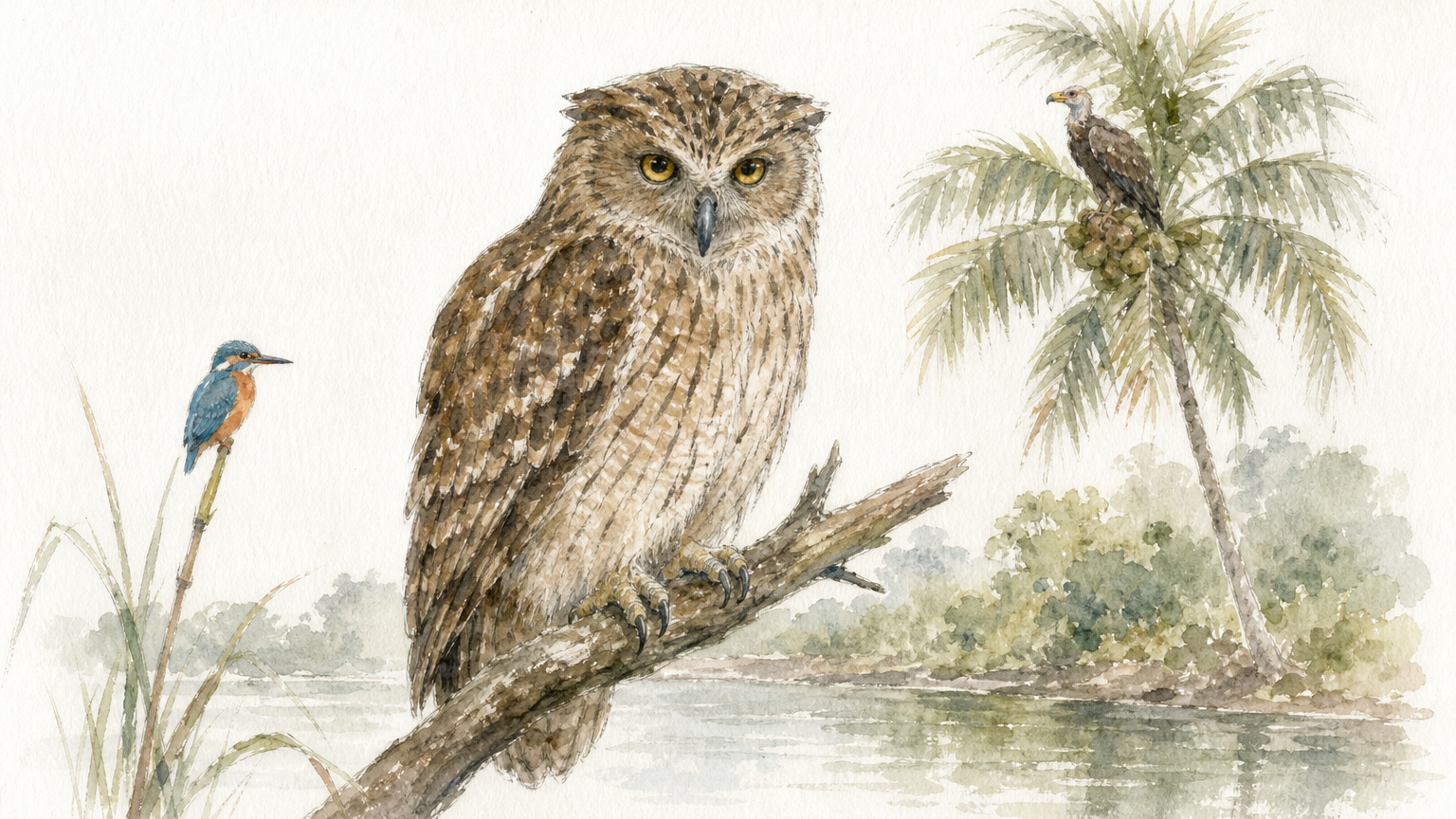
At night, KWS offers guided wildlife drives when nocturnal animals emerge, and the clear skies suit stargazing. Few Kenya parks give you that option.
Meru rewards patience, because its animals live across a whole landscape and not at one hotspot.
The Born Free story and Meru’s recovery
Meru is where Joy and George Adamson released Elsa the lioness, and where the park’s later recovery from poaching became a conservation success.
Elsa, the Adamsons and Born Free
In the 1950s the Adamsons raised the orphaned cub Elsa and returned her to the wild, at a time when many believed a human-raised lion could not survive on her own. Joy Adamson told the story in Born Free, later made into a film. Elsa lived and hunted in what is now Meru.
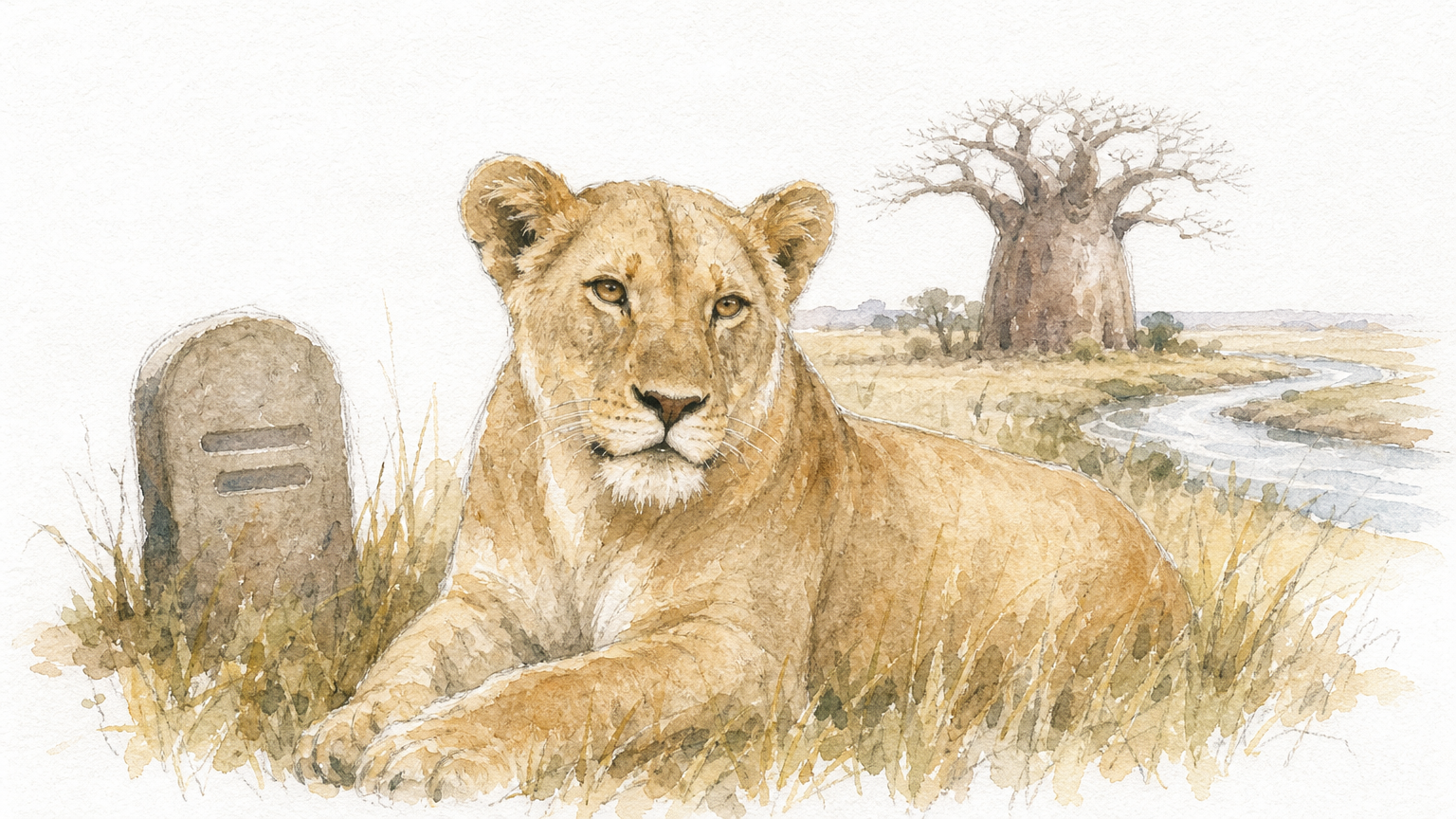
You can still find traces of that story in the park:
- Elsa’s grave
- Pippa’s grave, for the cheetah Joy Adamson raised
- Adamson’s Falls on the Tana River
- The Mwariama Mau Mau baobab hideout
- The point where the equator crosses the park
From poaching to recovery
Poaching in the 1980s devastated Meru’s wildlife, and the park faded from view for years. Recovery came through sustained protection. KWS improved security and infrastructure, and rhinos were carefully reintroduced.
Today the park forms part of a larger conservation ecosystem. It is also linked with the Tharaka Nithi Cultural Festival, which celebrates local music, dance and crafts while promoting conservation awareness. KWS presents a visit as a contribution to conservation.
Meru shows that a park written off after poaching can come back through steady protection.
How to plan a safari to Meru National Park
Plan for most of a day to reach Meru by road, travel in the drier months for easier sightings, and stay inside or near the park to make the distance worthwhile.
Getting there
Distances below come from KWS. Road routes use all-weather roads.
| Route | Distance |
|---|---|
| Nairobi via Nyeri, Nanyuki and Meru | About 348 km |
| Maua to Murera Gate | 35 km |
| Embu to Ura Gate | 161 km (about 290 km from Nairobi) |
You can also fly to an airstrip inside the park. The main one is Kinna, with others at Mulika and Mughwongo. We can arrange domestic flights, road transfers and Nairobi pick-ups from your hotel, the airport or a private residence.
Best time to visit
The drier months, roughly June to October and January to February, usually make wildlife easier to spot, because vegetation thins and animals gather near the rivers. The greener months bring fewer visitors and excellent birding. Meru’s permanent rivers keep the park productive across much of the year, and it is not a migration park, so you are not planning around a river crossing.
Meru pairs well with other parks. Many travelers combine it with the Samburu circuit, where Samburu, Buffalo Springs and Shaba are covered together. Others add camping at our private camp on the Talek River in the Maasai Mara, which has six en-suite tents and home-style meals.
Where to stay
Options inside and around the park range from simple to lodge-style:
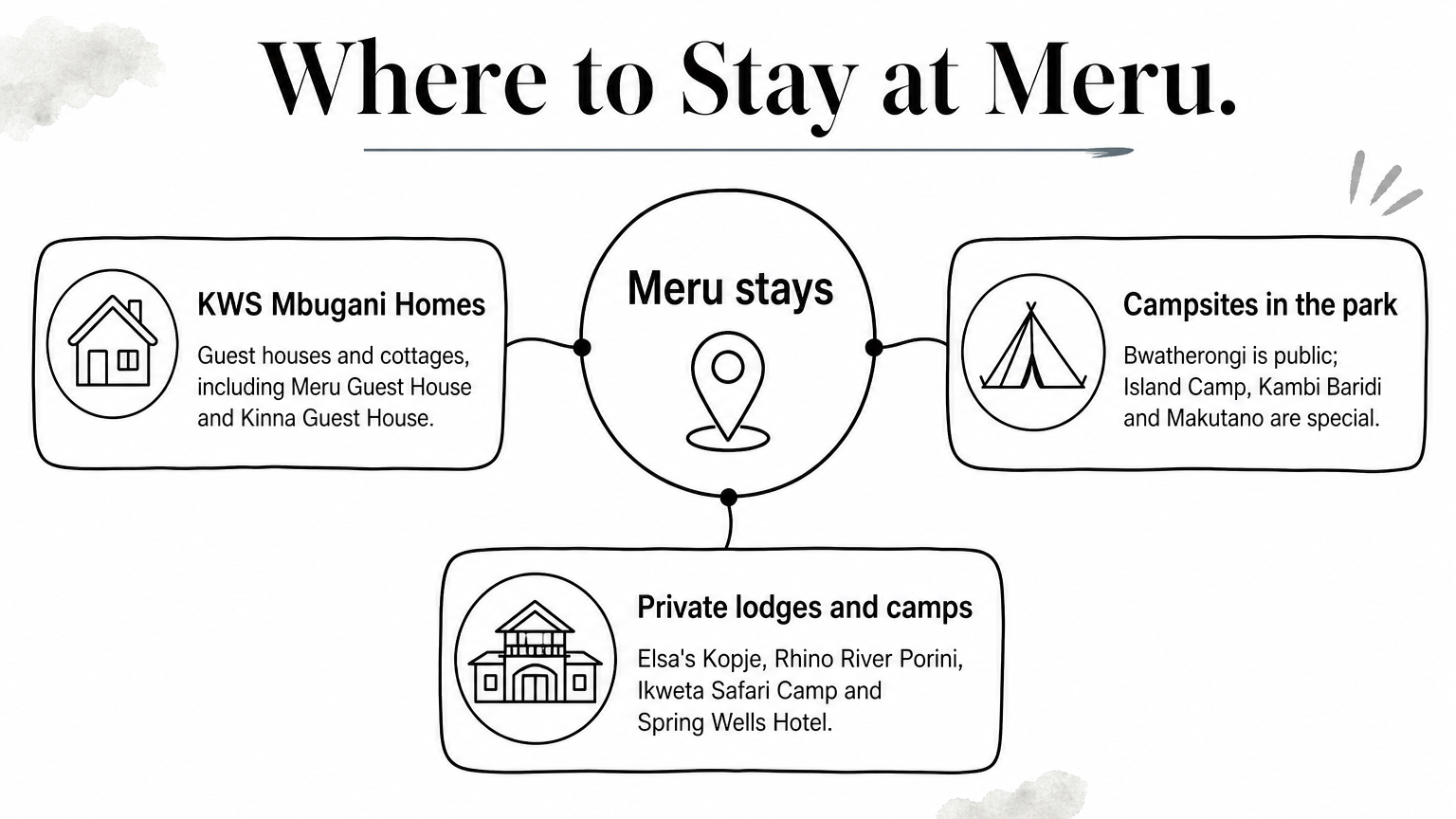
- KWS Mbugani Homes: guest houses and cottages, including Meru Guest House, Kinna Guest House and the Kinna and Murera cottages.
- Campsites: Bwatherongi is the public campsite, and the park also has special campsites such as Island Camp, Kambi Baridi and Makutano.
- Private lodges and camps: Elsa’s Kopje Eco-lodge, Rhino River Porini Camp, Ikweta Safari Camp and Spring Wells Hotel.
Rates change through the year, so ask us for a current quote and we will arrange the stay.
Allow enough days to justify the drive, because Meru is a park to settle into, not rush through.
Meru National Park entry fees and park rules
Entry fees depend on your residency, and as a visitor from the United States you pay the non-resident rate of USD 70 per adult and USD 20 per child.
Park entry fees
KWS sets these rates, and you pay through its online system.
| Category | Adult | Child |
|---|---|---|
| East African citizen | KES 800 | KES 500 |
| Kenya resident | KES 1,100 | KES 675 |
| Other African nationals | USD 40 | USD 20 |
| Non-resident (foreign visitor) | USD 70 | USD 20 |
KWS can revise fees, so we confirm the current amounts when we prepare your quote.
Park rules and what to pack
Rules protect both you and the animals. Gates open at 6:00 AM and close at 6:00 PM unless you are staying overnight, and the speed limit is 40 km/h. The other rules are:
- Stay in your vehicle except in designated areas, and keep doors closed.
- Stay on established roads, because off-road driving is prohibited.
- Keep at least 20 meters from wildlife, and never feed animals.
- Single-use plastic is banned, so carry out all trash.
Pack drinking water, food, a camera, binoculars, sunscreen, insect repellent, sunglasses, a first aid kit and sturdy hiking gear.
Respect the 20-meter distance and the 40 km/h limit, since quiet, careful driving is why Meru’s wildlife behaves naturally.
Planning your Meru visit
Meru National Park is Kenya for travelers who prefer space to spectacle. You get rivers, varied habitats, rhinos, hundreds of bird species and the Born Free story, with few vehicles around. The cost is a longer drive and sightings that depend on patience.
What travelers say about Best Camping Tours and Safaris
Travelers rate us 5.0 out of 5 from 306 reviews on TripAdvisor. You can read what guests wrote about their camping safaris and Maasai Mara trips on our TripAdvisor page before you decide.
If that sounds right,
contact our team for a current quote on a Meru safari. We can tailor the trip around your dates, interests and pace, and combine Meru with other Kenya parks or the coast.
Call or WhatsApp on +254 723 166170, call +254 733 630053, email reservations@bestcampingkenya.com, or visit www.bestcampingkenya.com.