
If you searched for Nairobi national parks in Kenya, the answer is a single park: Nairobi National Park, a 117 square kilometer (45 square mile) wildlife reserve that starts about 7 km south of the city center. Established in 1946, it is Kenya’s first national park and the only one in the world on the edge of a capital city. Lions, rhinos, giraffes, and buffalo live there, with the Nairobi skyline on the horizon. Nairobi has no other national park, though the city has several wildlife stops that people often lump in with it.
This guide covers what you need to plan a visit. You will find out why the park is worth your time, how it compares with Kenya’s other parks, and which animals and birds you can expect. Then come the practical details: location, gate hours, how park fees work, the best season, and a sample day.
Best Camping Tours & Safaris is a Nairobi-based operator, in business since 1986. We run a Full Day Nairobi City tour that includes the park, so we write this from the Nairobi side, with the road conditions and timing that visitors rarely hear about.
Why Nairobi National Park is worth your time
Nairobi National Park is worth it if you have a free half day, a long layover, or a few days in the capital before heading to the Maasai Mara or Amboseli. It gives you a genuine game drive with wild predators and rhinos, 20 to 30 minutes from downtown, without a flight or an overnight stay.
A real safari beside a capital city
This is not a zoo. The park is fenced on its northern, western, and eastern sides where it meets the city, but the southern boundary follows the Mbagathi River and stays open. That opening links the park to the Kitengela area and the Athi-Kapiti plains, so zebra and wildebeest still move in and out as rain and grass dictate. The animals are wild and unmanaged.
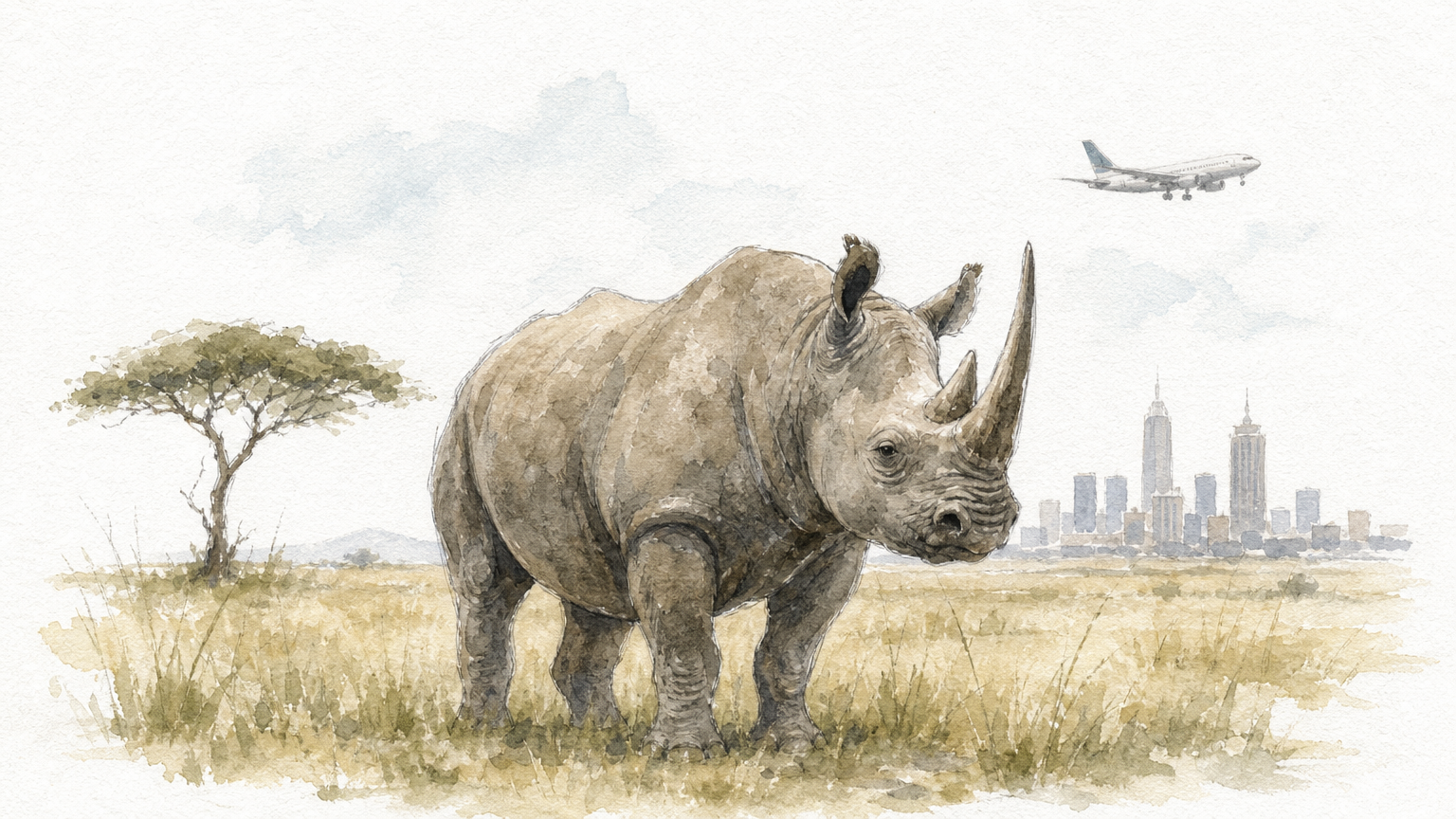
The landscape is varied for its size. You get open grass plains, acacia bush, rocky valleys, patches of highland forest, and riverine strips. Aircraft from Jomo Kenyatta International Airport pass low overhead, and the airport runway is less than 5 km from the fence. That contrast is what makes the park distinctive.
Is it worth going? Yes, for photographers, first-time visitors, families with limited time, and anyone wanting a safari preview. It is not a replacement for a multi-day trip. The park is small, and you will not find the herd scale of the Mara or the elephants of Amboseli here.
Nairobi National Park is the quickest way to see wild lions and rhinos in Kenya, but it works best as a starter or a finisher, not the whole safari.
How it compares with other Kenya parks
The best national park in Kenya depends on what you want to see. Each park has its own landscape, wildlife, and birds, so they are not interchangeable.
| Park | Known for | Choose it when |
|---|---|---|
| Nairobi National Park | Black rhino, lion, serval, city skyline views | You have half a day or one day near Nairobi |
| Maasai Mara | Big cats, huge plains herds, Mara River crossings in migration season | You want the classic safari |
| Amboseli | Elephants with Mount Kilimanjaro behind them | You want elephant photography and open views |
| Samburu, Buffalo Springs, Shaba | Dry-country species such as Grevy’s zebra, reticulated giraffe, gerenuk, and Somali ostrich | You want animals you will not see in the south |
| Lake Nakuru | Rhinos and lakeside birdlife | You want birds and rhinos in a compact park |
| Tsavo West | Volcanic scenery and wide wilderness | You want rugged landscape and fewer vehicles |
My own view: Nairobi is the best park in Kenya for convenience and rhino sightings, and the Mara is the best for scale. Most travelers who have the time do both.
Conservation: rhinos, lions, and a famous burn site
Conservation is why the park matters beyond tourism. It earned the nickname "Kifaru Ark" (kifaru is Swahili for rhino) for protecting both black and white rhinos in a very small area. The park holds roughly 100 black rhinos, one of the highest concentrations in Kenya, and translocations from here have helped stock other Kenyan sanctuaries.
The park also supports more than 40 adult resident lions and is recognized as a Lion Conservation Unit by the IUCN Cat Specialist Group. Its southern corridor keeps the wider ecosystem connected, and that corridor is under pressure from development, including a railway viaduct across the park’s southern end.
The Ivory Burning Site Monument sits inside the park. Kenya burned 12 tonnes of confiscated ivory here in 1989, and another 105 tonnes of ivory plus rhino horn in 2016. Your guide can take you to it, and the monument gives context to everything else you see.
Wildlife and birds you can see in the park
Expect to see rhinos, lions, giraffes, buffalo, zebra, hippos, and more than 400 bird species. The only Big Five animal missing is the elephant, which does not live in the park.
Predators and rhinos
The headline animals are the ones most visitors come for:
- Black rhino: around 100 animals, spotted mostly in bush and woodland edges.
- Southern white rhino: easier to see on open grass.
- Lion: more than 40 adults, often resting on the plains in the morning.
- Leopard and cheetah: both resident, but sightings are usually brief.
- Serval: Nairobi is one of Kenya’s best places to see this small spotted cat, hunting in the long grass.
- Spotted hyena and black-backed jackal: often active near dusk.
Elephant orphans can be seen at the neighboring David Sheldrick Wildlife Trust, which completes the picture without leaving the area.
Plains animals, hippos, and crocodiles
The grasslands hold Maasai giraffe, Cape buffalo, plains zebra, blue wildebeest, eland, hartebeest, impala, Thomson’s gazelle, Grant’s gazelle, warthog, and ostrich. Wildebeest and zebra numbers rise and fall as they move through the open southern boundary. Hippos and crocodiles live in the river and dams, and the hippo pools are one of the few places where you may be allowed out of the vehicle with a ranger.
Birds
The park’s 400-plus species make it a strong birding stop. Look for secretary birds stalking the grass, ostriches, crowned cranes, African fish eagles over the water, and marabou storks. Smaller birds are just as good: lilac-breasted rollers, superb starlings, hadada ibis, pied kingfishers, and red-billed hornbills.
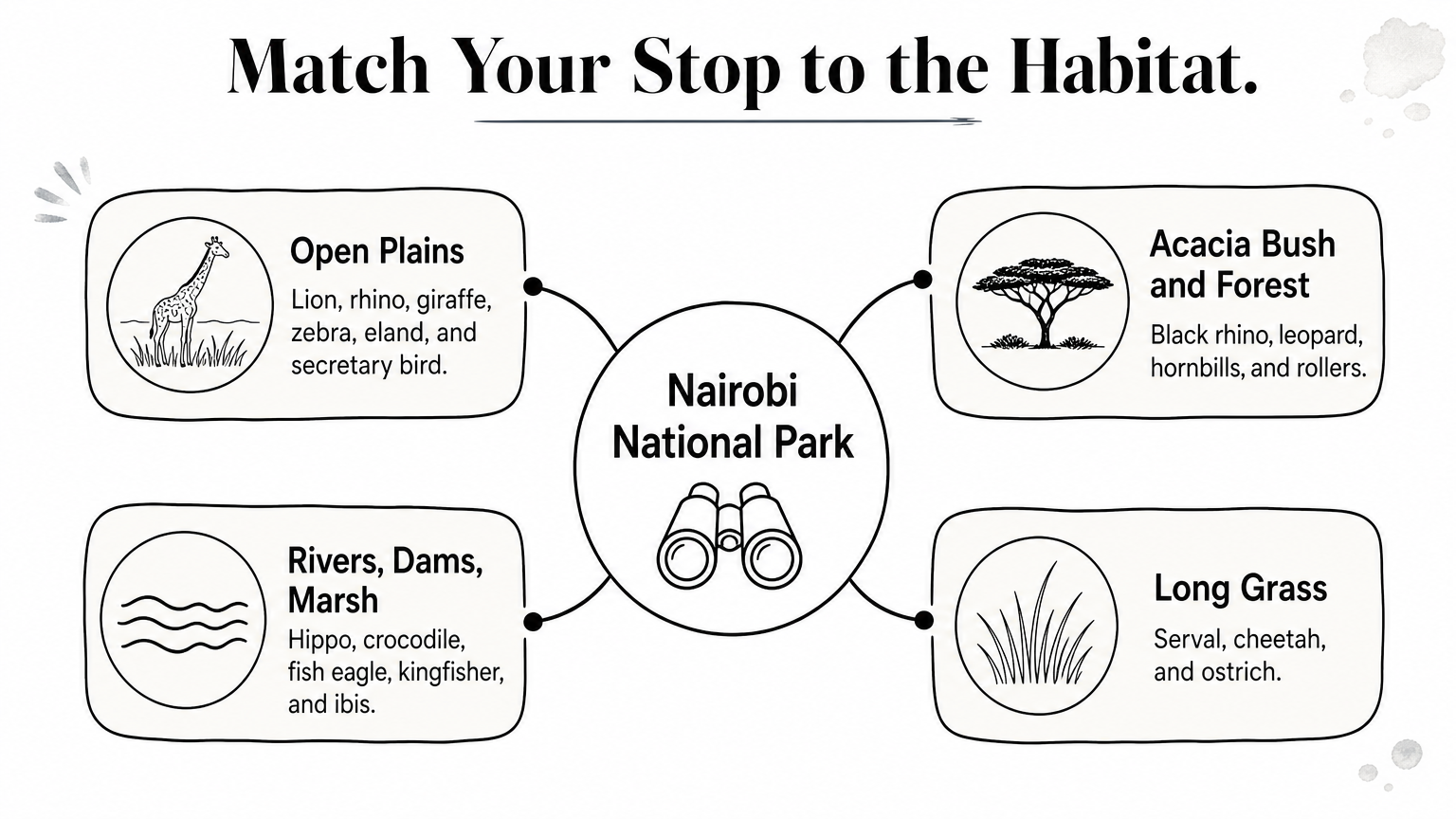
| Habitat | What to look for |
|---|---|
| Open plains | Lion, rhino, giraffe, zebra, eland, secretary bird |
| Acacia bush and forest | Black rhino, leopard, hornbills, rollers |
| Rivers, dams, marsh | Hippo, crocodile, fish eagle, kingfisher, ibis |
| Long grass | Serval, cheetah, ostrich |
Ask your driver-guide to match your stops to habitat: plains for predators, bush for black rhino, and water for birds.
Location, entry fees, and how to get in
The park lies in southern Nairobi, with the main gate off Langata Road, about 20 to 30 minutes by road from the city center. You pay a fixed park fee per person plus a vehicle fee, and gates open at 6:00 AM.
Where the park is and how to get there
If you land at Jomo Kenyatta International Airport, you are minutes from the park fence. Many travelers stay near the airport on arrival night, at hotels such as Argyle, Ole Sereni, EKA, and Panari. On the Westlands side, Novotel Westlands is a solid option, and Concord and Zehneria suit tighter budgets. In Karen, Wildebeest Camp is a lovely place to stay.
Good roads lead to the gate, but inside the park the tracks are dirt. After heavy rain they can turn muddy. A vehicle with a pop-up roof helps for viewing and photography, and an early start gets you the cooler, quieter hours when predators move.
Entry fees and tickets
Kenya Wildlife Service (KWS) sets the entry fees. They are charged per person for each 24 hours, with separate rates for non-resident adults, non-resident children, and Kenyan citizens and residents, plus a fee for your vehicle. KWS has moved to electronic payment, so plan on paying by card or online rather than with cash. Rates are revised from time to time, so confirm them on the KWS Nairobi National Park page before you go.
On our Full Day Nairobi City tour, park entry fees are not included. They are paid directly, so you see the exact amount charged on your travel date. Contact us for a current quote on the tour itself.
Guided drive or self-drive
I recommend a guided drive. A guide knows where the lions rest and where the rhinos browse, and can identify birds quickly. Walking on your own inside the park is not permitted. Where walks are allowed, they are with a ranger.
Treat the gate time as part of your plan: arrive at 6:00 AM for the best light, or accept a busier park later in the morning.
Best time to visit and a sample day
Nairobi National Park can be visited all year. Dawn is the best time of day, and the dry months make animals easier to spot, though the park’s open plains give good visibility in most conditions.
Season by season
| Months | Conditions | What it means for you |
|---|---|---|
| January to February | Dry, short grass | Easy sightings, good light |
| March to May | Long rains, lush green | Muddy tracks, fewer vehicles, strong birding |
| June to October | Cool and dry | Animals gather at water, dusty roads |
| November to December | Short rains | Green landscape, good bird lists |
Weekends are busier with local visitors, so a weekday drive feels quieter. Bird lists peak in the rains, while mammals are easiest to see when the grass is short.
A Nairobi day plan that works
Our Full Day Nairobi City tour combines the park with three other stops, and it works well for a first or last day in Kenya. It starts with an 08:30 pick-up from your Nairobi hotel in a Safari Land Cruiser or minibus with a pop-up roof and sliding windows. Mineral water is provided, 1 litre per person per day. A packed lunch box is available at USD 25 per person.
- Game drive in Nairobi National Park: rhino, lion, giraffe, and buffalo on the plains.
- David Sheldrick Wildlife Trust: orphaned elephants, which are open to the public at set times, so your guide plans around them.
- Lunch: at a restaurant of your choice, or a packed lunch box.
- Giraffe Centre: a close feeding encounter with giraffes, a rescue-style attraction rather than a wild sighting.
- Souvenir market or Spinners Web: if time allows.
- Finish: at your hotel, or at dinner at the Carnivore restaurant.
The Nairobi Safari Walk and Animal Orphanage keep animals in enclosures, so they are good for close views but are not wild sightings.
A single day in Nairobi can give you rhinos, orphaned elephants, and giraffes, as long as you start early and let your guide set the pace.
Extending your trip and reading reviews
Nairobi National Park pairs well with a longer Kenya trip, because the rest of the country offers very different wildlife, landscapes, and coastline.
From Nairobi to the rest of Kenya
Many guests start in Nairobi and head to the Maasai Mara. We operate our own private camp on the Talek River, with six en-suite tents plus a family tent, hot showers, quality bedding, home-style meals, and campfire evenings. You can see it on our Mara camp page.
Other options: Amboseli for elephants under Kilimanjaro, Samburu for dry-country species, and Lake Nakuru and Lake Naivasha for birds. After the safari, you can add beach days in Diani, Watamu, Mombasa, Malindi, or Lamu, or cross to Zanzibar. The coast also offers snorkeling, scuba diving, and dolphin and whale watching.
Reviews from travelers
Independent reviews help when you compare operators. Travelers who have joined our tours leave feedback on TripAdvisor, and you can read what they say on our TripAdvisor reviews page. Check recent entries and see whether they describe the kind of trip you want.
Planning your Nairobi park day
Nairobi has one national park, and it is one of the most distinctive wildlife places in Kenya. You get black rhinos, lions, servals, giraffes, and more than 400 bird species within sight of city towers. Go early, pick the season that suits your priorities, confirm the current KWS fees, and pair the park with the Sheldrick Trust for a well-rounded day.
If you want a guided day with hotel pick-up, or a full Kenya safari that starts here, contact us for a current quote and we will tailor the plan to your dates and interests.
Call or WhatsApp on +254 723 166170, call +254 733 630053, email reservations@bestcampingkenya.com, or visit bestcampingkenya.com to plan your Kenya safari with Best Camping Tours & Safaris.