
Ol Pejeta Conservancy is a not-for-profit wildlife conservancy of about 360 square kilometers in Laikipia County, central Kenya. It sits on the equator in sight of Mount Kenya. It is famous for the last two northern white rhinos on Earth, both female, and for one of the largest rhino populations in Kenya, guarded around the clock. You can visit on a long day trip from Nairobi, but one or two nights let you see far more. You pay daily conservancy fees, and the northern white rhino visit is arranged on top.
This guide explains why the conservancy matters, how to plan the journey, which animals and birds you can expect, what to do once inside, how fees work, where to sleep and how booking works. It also shows how Ol Pejeta compares with other Kenyan parks, so you can decide whether it earns a place in your itinerary.
Best Camping Tours & Safaris has run safaris from Nairobi since 1986. Ol Pejeta sits in the same central highlands as Mount Kenya, the Aberdares and the Samburu circuit, so it can fit into a tailor-made route. What follows is the practical picture we give guests before they decide.
Why Ol Pejeta Conservancy matters for rhino conservation
Ol Pejeta matters because it holds the final two northern white rhinos and a large black rhino population, and visitor income pays for protecting them. Few places in Kenya link a trip so directly to a conservation result.
A not-for-profit built on a former cattle ranch
The conservancy grew out of a working cattle ranch. From the late 1980s the land was turned into a wildlife sanctuary, and today it runs as a not-for-profit that reinvests visitor income in conservation and in the surrounding communities.
People often ask who owns Ol Pejeta. No safari company or lodge does. The conservancy manages the land itself and works alongside the Kenya Wildlife Service and the Laikipia county government. It still keeps cattle, which help manage the grass for wildlife and earn income. That mix of livestock, wildlife and tourism is what the conservancy calls integrated conservation.
The last two northern white rhinos
Najin and Fatu, a mother and daughter, are the last two northern white rhinos alive. They were born in a Czech zoo and moved to Ol Pejeta in 2009 with two males. The last male, Sudan, died at the conservancy in 2018 at the age of 45. Neither female can carry a calf, so natural breeding is no longer possible.
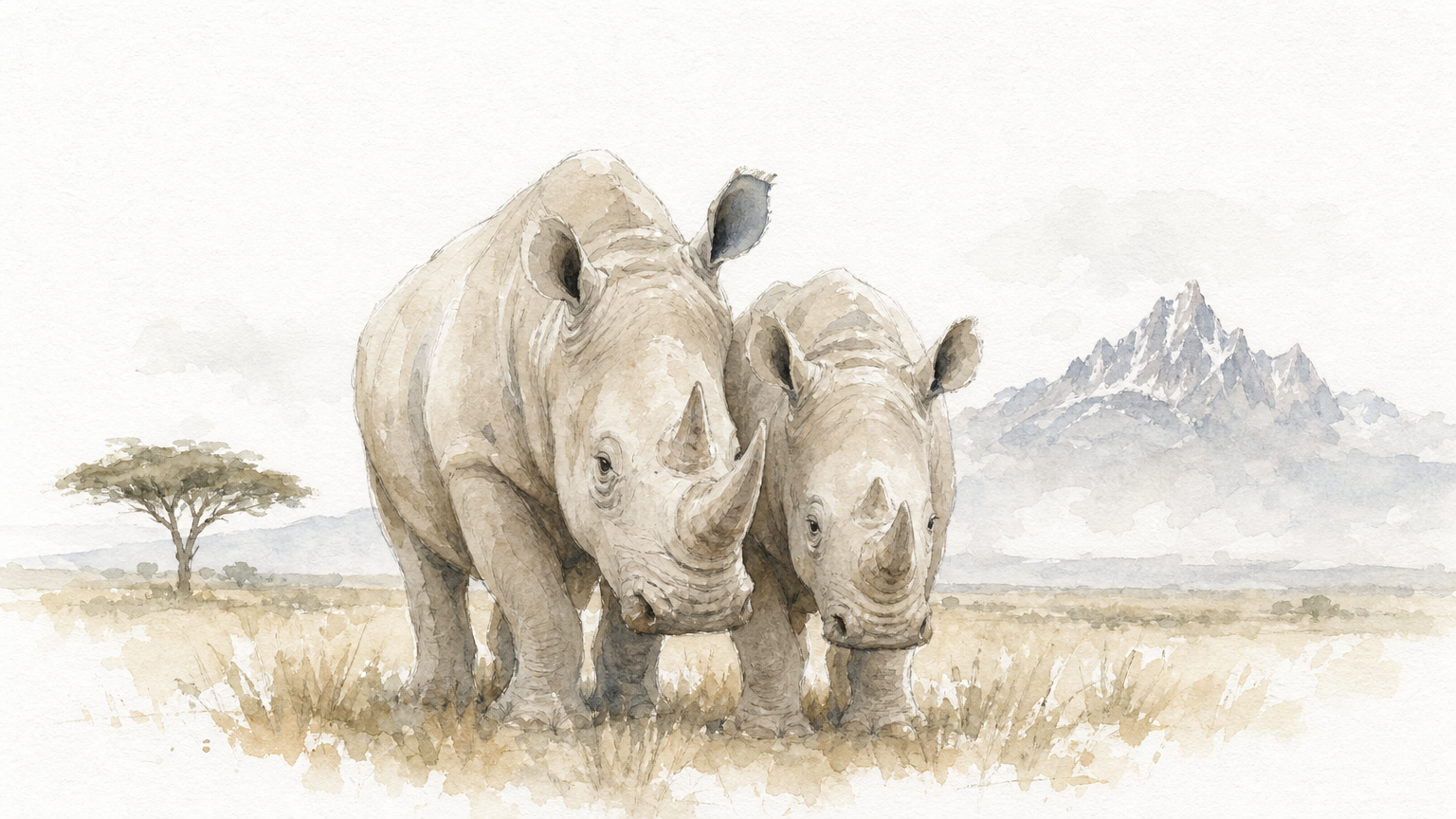
Scientists are now working on assisted reproduction. Eggs have been collected from Fatu and fertilized with stored sperm from males that have died. The resulting embryos are frozen, with the aim of implanting them in southern white rhino surrogates. Rangers guard the two females day and night. Visitors can meet them in their protected area with a ranger, as a separately arranged activity.
The last two northern white rhinos are both female, so only science can save the subspecies.
Black rhinos, security and neighboring communities
Ol Pejeta is also a sanctuary for black rhinos, the more elusive and more endangered of Kenya’s two rhino species, alongside southern white rhinos. Rangers monitor the rhinos around the clock, and anti-poaching work includes armed patrols and tracker dogs. A rhino memorial on the grounds is a quiet reminder of why that security exists. Guides also talk about Baraka, a blind black rhino that visitors often hear about.
The conservancy’s community department works with roughly 45,000 people in 21 neighboring communities. Its focus is education, livelihoods and local governance. Part of what you pay on entry supports that work.
How to plan a visit to Ol Pejeta Conservancy
Plan on about four hours each way by road from Nairobi, aim for the dry months if you can, and sleep at least one night inside. Those three choices shape the whole trip.
Getting there from Nairobi
The conservancy lies just outside Nanyuki, roughly four hours’ drive north of Nairobi via Nyeri. The main road is paved, but tracks inside the conservancy are rough, so a 4×4 safari vehicle with a pop-up roof is the right tool. Self-drive is possible. A driver-guide, though, knows where the animals are, reads their behavior and handles the check-in paperwork. Expect to give personal details at the gate, which takes a few minutes.
A light aircraft is the alternative if you are short of time. Scheduled flights link Nairobi’s Wilson Airport with the Nanyuki area, and an airstrip serves the conservancy. Schedules change, so ask us to check current options.
Best time to visit
Ol Pejeta’s animals live there year-round, so unlike the Maasai Mara you do not time your trip around a migration. The seasons still change the experience.
| Months | Season | What it means for you |
|---|---|---|
| January to March | Dry | Good game viewing, clear mornings and fine light for photos |
| April to May | Long rains | Quietest period, muddy tracks, and some camps may close |
| June to October | Main dry season | Best game viewing, as animals gather at water |
| November to December | Short rains | Green scenery and migratory birds, with showers that usually pass |
Nights are cool at this altitude in every season. Pack a sweater, a hat, sunscreen and a refillable water bottle.
Ol Pejeta works in every month, but June to October gives the easiest wildlife viewing.
Day trip or overnight?
A day trip works, but it means roughly eight hours on the road for perhaps six hours inside. You will see the highlights and little else. One night adds an afternoon drive, a dawn drive and room for the rhino and chimpanzee visits. A sample two-day plan looks like this:
- Day 1: Leave Nairobi early, arrive around midday, have lunch, then take an afternoon game drive and watch the sunset.
- Day 2: Take a dawn game drive or lion tracking, visit the northern white rhinos, call at the chimpanzee sanctuary around midday, then drive back to Nairobi.
What wildlife and birds you can see at Ol Pejeta
You can see the Big Five at Ol Pejeta, plus several species that are hard to find in the Maasai Mara or Amboseli. Rhinos are the headline, but the supporting cast is broad.
The rhinos and the Big Five
Black and white rhinos are visible on most drives. Lions are common, and rangers fit some lions with tracking collars to help protect them. Elephants and buffalo are regular sightings. Leopards live here too, but they are shy and a sighting is a bonus, not a promise.
The endangered species enclosure is the one fenced area, where the most closely guarded rhinos live. Elsewhere the animals roam the whole 360 square kilometers.
Species that set Ol Pejeta apart
Plenty of other animals live here, and some differ from the Mara. The table groups what you can reasonably expect.
| Group | What lives here | Worth knowing |
|---|---|---|
| Rhinos | Black, southern white, northern white | Northern whites are visited only by arrangement |
| Big cats | Lion, leopard, cheetah | Lions are easiest early and late in the day |
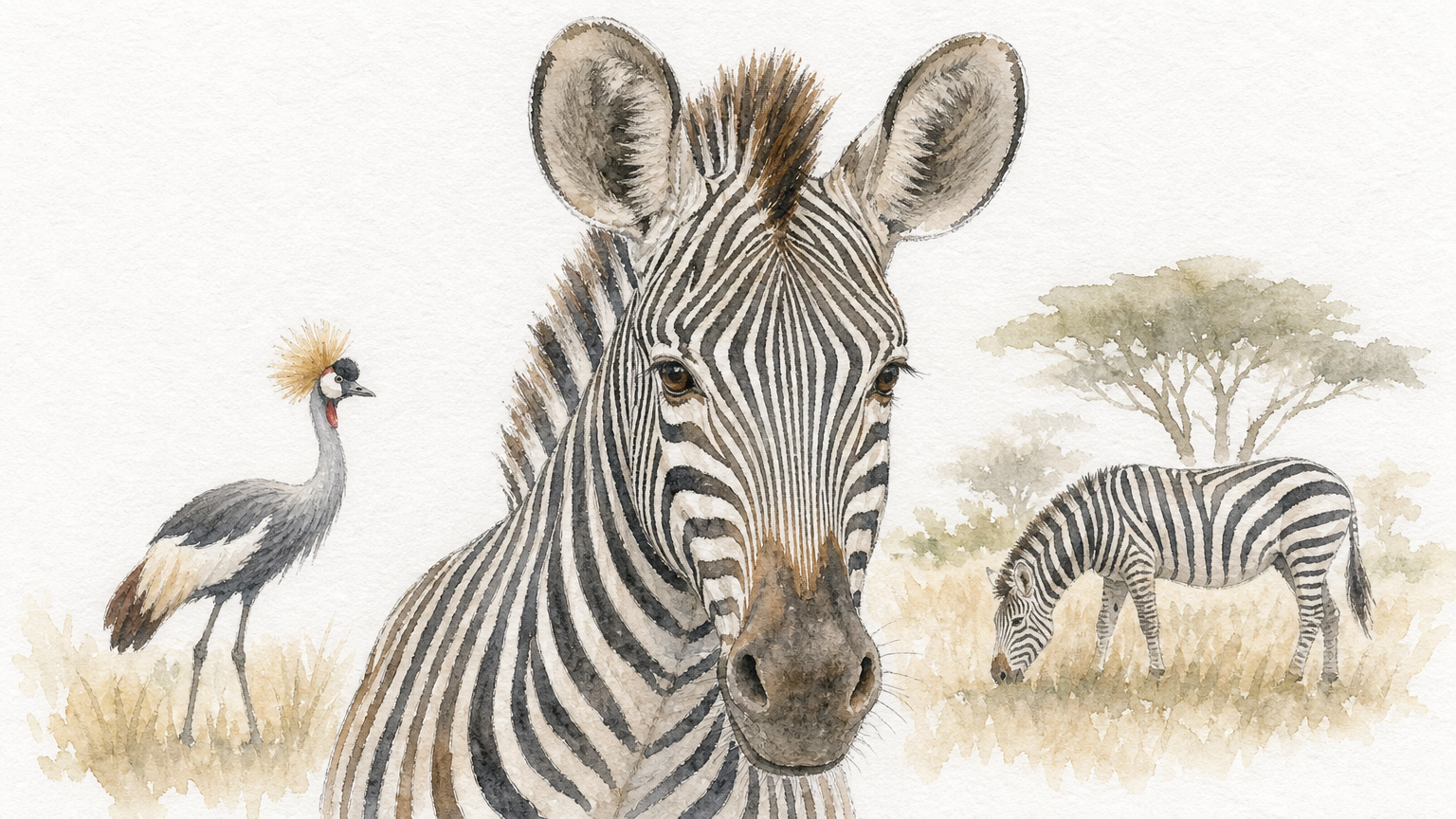
| Zebra and antelope | Grevy’s zebra, plains zebra, Jackson’s hartebeest, Beisa oryx, eland, waterbuck, Thomson’s and Grant’s gazelles | Grevy’s zebra is rare and also found around Samburu |
| Other large mammals | Elephant, buffalo, giraffe, hippo | Hippos are easiest at the river hide |
| Smaller predators and primates | Spotted hyena, jackal, baboon | Hyenas and jackals show up on night drives |
| Chimpanzees | Rescued, non-native | Kenya’s only chimpanzee sanctuary |
Grevy’s zebra deserves a mention. Its narrow stripes and large round ears are easy to tell apart from the common zebra, and it is far scarcer.
Birds
The mix of grass plains, acacia woodland and the Ewaso Nyiro river supports hundreds of bird species. Ostriches, secretary birds and kori bustards walk the plains, grey crowned cranes turn up near water, and raptors work the thermals. The short rains from November bring migratory visitors, which makes that period good for birders.
Ol Pejeta rewards a slow drive: look beyond the rhinos for Grevy’s zebra, cheetah and the birds.
Things to do at Ol Pejeta Conservancy
The activity list here is longer than at most Kenyan parks. Besides standard game drives you can track lions, meet rhinos and chimpanzees, walk, cycle or ride a horse.
Game drives, night drives and lion tracking
A morning or afternoon game drive is the core activity, and the best light comes in the first and last hours of the day. Lion tracking uses the collars rangers have fitted to some lions, so you head out with a ranger who knows roughly where a pride is resting. Morning and late afternoon are the usual windows.
Night drives are led by conservancy rangers, usually in a conservancy vehicle with a spotlight. They show what daytime drives miss, such as hyenas and other nocturnal animals. Your operator will confirm how to arrange one.
Rhino, chimpanzee and hippo encounters
The northern white rhino visit is the one most people come for. You travel with a ranger who explains the story of Najin and Fatu, and you stand close to two animals that cannot be replaced. Some visitors find it moving, and others find it sobering. Both reactions are fair. The visit is paid for separately, so ask about it when you plan.
The Sweetwaters chimpanzee sanctuary gives a home to chimpanzees rescued from abuse and the illegal wildlife trade. They are not native to Kenya. The animals live in large wooded enclosures, so sightings depend on where they are that day, and it is not a zoo-style close-up. A hippo hide on the Ewaso Nyiro river rounds out the encounters. Reach it on a short walk through riverside vegetation.
Walking, cycling, horse riding and a quick guide
Ol Pejeta also offers guided walks with rangers, plus cycling and horse riding in suitable areas. These suit travelers who want to get out of the vehicle, and each comes with rules set by the conservancy for safety.
| Activity | Best for | Note |
|---|---|---|
| Game drive | Everyone | Best at sunrise and late afternoon |
| Lion tracking | Big cat fans | Ranger-led |
| Night drive | Nocturnal animals | Conservancy vehicle |
| Northern white rhino visit | Conservation interest | Arranged separately, extra charge |
| Chimpanzee sanctuary | Families | Sightings vary |
| Hippo hide | Photographers | Short walk |
| Walking, cycling, riding | Active travelers | Availability varies, ask ahead |
Ol Pejeta Conservancy fees and what they cover
You pay a daily conservancy fee per person, plus extras for specific activities. The exact amounts change, so ask for a current quote and avoid relying on old figures online.
How the fees are structured
Entry fees are quoted in US dollars per person per day. Rates differ by visitor category, with separate prices for non-residents, Kenya residents and Kenya citizens, and for adults and children. Child rates stop at an age cutoff, so check it if you travel with teenagers. Vehicle fees and any camping or accommodation charges come on top.
Fees fund rhino security, veterinary work, community projects and upkeep. That is why a conservancy costs more per day than some national parks. Whether that suits you depends on how much you value the rhinos and the conservation story. If your priority is the cheapest possible game drive, other parks cost less.
Conservancy fees buy conservation, which is why Ol Pejeta costs more per day than some national parks.
Extras that add to the bill
The main extras are the northern white rhino visit, night drives, guided walks, horse riding and cycling. Some are priced per person and some per vehicle. Meals, drinks and accommodation inside the conservancy are billed separately.
Budgeting without surprises
Before you commit, run through this list with whoever is arranging your trip:
- Which daily fee category applies to each traveler, and what is the child age cutoff?
- Is a vehicle fee charged, and is it per day or per entry?
- Is the northern white rhino visit priced per person, and is it limited by availability?
- Which activities do you want, and which carry their own charge?
- What do accommodation and meals cost, and are they billed by the lodge or camp?
We do not quote Ol Pejeta rates in this article because they change. Contact us for a current quote for your dates and group size.
Where to stay and how to book your visit
Stay inside the conservancy if you can, because early and late drives start on your doorstep. Tented camps, lodges, private houses and campsites all exist, and booking through an operator keeps the logistics in one place.
Camps, lodges and campsites
Accommodation falls into a few styles. The table sets them side by side, with no rates because those change.
| Option | Style | Suits |
|---|---|---|
| Sweetwaters Serena Camp | Large tented camp, about 50 tents, with views of watering holes | Families and first-time safari travelers |
| Ol Pejeta Bush Camp | Furnished tents with en-suite bathrooms on the Ewaso Nyiro river | Couples wanting a bush feel |
| Porini Rhino Camp | Small, secluded eco-friendly camp in a valley | Travelers who want peace |
| Kicheche Laikipia Camp | Luxury tented camp known for conservation work | Special occasions |
| Ol Pejeta House and Pelican House | Private houses with few rooms | Families and small groups |
| Campsites | Basic sites with a guard, such as the Hippo Hide campsite | Adventurous campers with a guide |
Camping inside a conservancy full of elephants and buffalo is an experience, but it needs a guard and a guide who knows the rules. Do not attempt it casually.
How booking works
The simplest route is to arrange the trip through an operator. We handle the vehicle, driver-guide, conservancy entry and activity slots, and we check availability for your preferred camp, including the northern white rhino visit. The steps are:
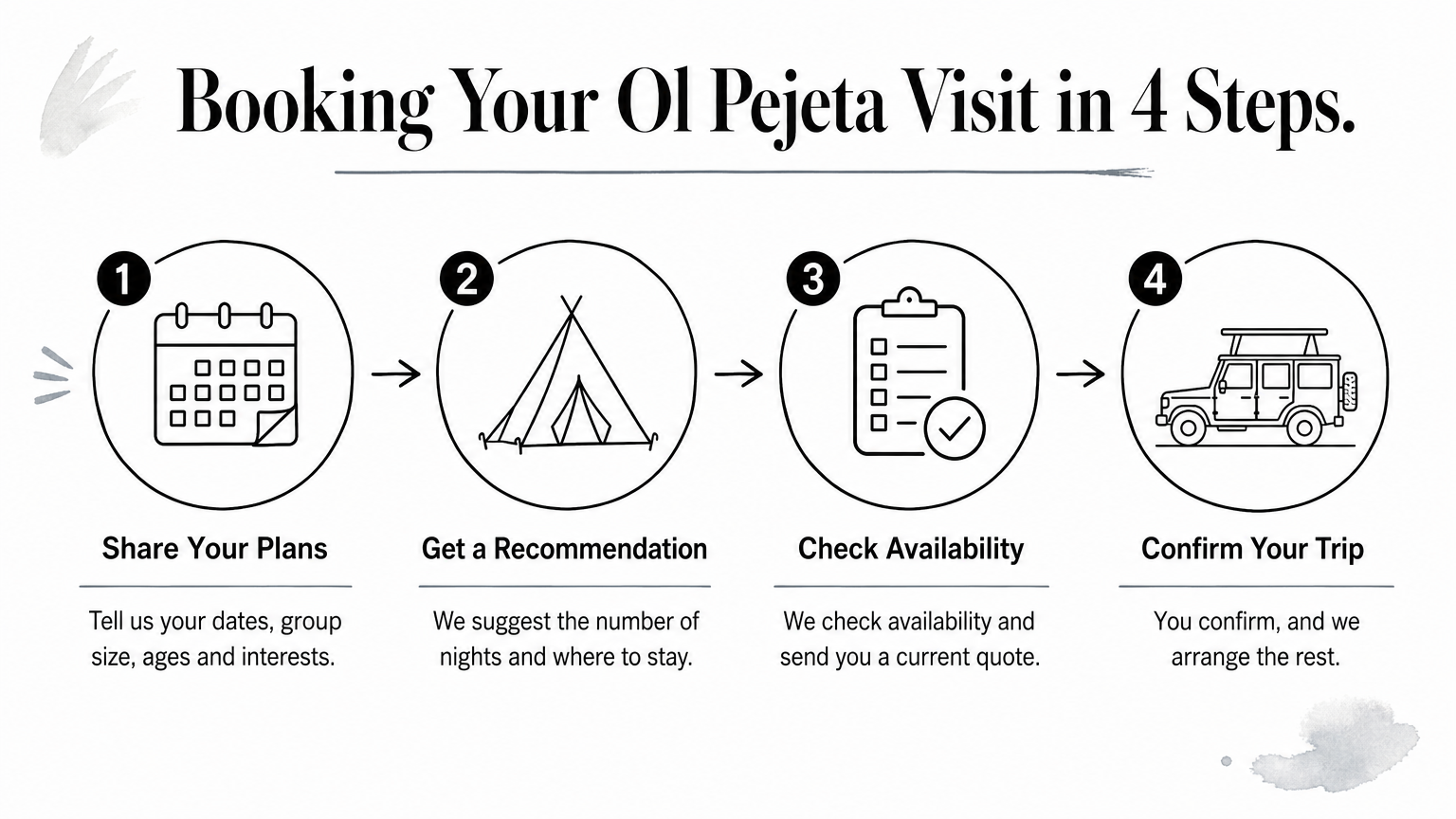
- Tell us your dates, group size, ages and interests.
- We recommend how many nights suit you and where to stay.
- We check availability and send a current quote.
- You confirm, and we arrange the rest.
Popular camps fill well ahead in the dry months, so start planning early. If you are traveling in June to October or over the December holidays, ask for availability first.
Is Ol Pejeta worth visiting, and how does it compare?
Ol Pejeta is worth visiting if you care about rhinos, conservation and a varied activity list. It is less compelling if you want the Great Migration or the lowest daily cost.
Who will love it and who might not
Ol Pejeta suits rhino lovers, photographers, families and travelers who like hands-on conservation. You can meet the northern white rhinos, see black rhinos regularly and add a night drive or a walk. One thing to know before you go is that the conservancy is pricier than some parks. At least one recent visitor felt it was poor value, especially for families with older children. If rhinos matter to you, the experience justifies the cost. If you only want a general safari, another park may suit better.
How it compares with other Kenyan parks
Kenya’s parks differ, and Ol Pejeta fills a specific slot in a wider trip.
| Park | Known for | Best for |
|---|---|---|
| Ol Pejeta | Northern white rhinos, black rhinos, chimpanzee sanctuary | Rhinos, conservation, varied activities |
| Lake Nakuru | Rhinos and, in good seasons, flamingos | A compact rhino and bird stop |
| Samburu | Special Five, Grevy’s zebra, river elephants | Dry-country species and birds |
| Amboseli | Elephants against Mount Kilimanjaro | Photography |
| Maasai Mara | Big cats, Big Five, river crossings in season | Classic safari and the migration |
| Meru | Born Free history, rhino sanctuary, few visitors | Quiet, off-the-beaten-path travel |
Combining Ol Pejeta with other Kenya parks
Ol Pejeta pairs well with Samburu and the Aberdares or Mount Kenya, since all lie in the central highlands. Our established itineraries, such as the 8-day Mt. Kenya, Samburu, Lake Nakuru and Masai Mara route and the 10-day Classic Kenya lodge safari, cover that region. We can add Ol Pejeta to a tailor-made version.
Many guests then finish in the Mara, and that is where we put our own private camp on the Talek River. It has en-suite tents, hot showers, home-style meals and campfire evenings. Read more on our Mara camp page, or watch a short video of the campsite. If beaches appeal, we can add Diani, Watamu, Mombasa, Malindi, Lamu or Zanzibar afterward.
Reviews and credentials
Best Camping Tours & Safaris is a family-run, government-licensed Kenyan operator, affiliated with the Kenya Association of Tour Operators and licensed by the Tourism Regulatory Authority. You can read independent traveler feedback on our Tripadvisor page before you decide.
Planning your Ol Pejeta visit
Ol Pejeta Conservancy is a rhino sanctuary first, a safari destination second. The last two northern white rhinos live there, the black rhino population is large and well guarded, and the activity list goes well beyond a standard game drive. Go for at least one night, aim for the dry months if possible, and budget for daily fees plus the rhino visit.
If you want help turning this into a plan, ask us for a current quote and a tailor-made Kenya itinerary. We will match the number of nights, the camp and the other parks to your interests, group and budget.
Call or WhatsApp on +254 723 166170, or call +254 733 630053. Email reservations@bestcampingkenya.com or visit bestcampingkenya.com.